Quotessence
Home / Quotes / Quote by Dean Koontz

Quote by Dean Koontz

“Nature was a green battlefield where the weak were forever preyed on by the strong. Nature did not care, nor did the earth, which for all its beauty was nonetheless a hard place, indifferent to its creatures. It was mind that mattered, mind that cared, mind that loved, the best works of the mind that changed this hard world for the better. Mind—and the heart—had bonded people and dogs for tens of thousands of years. They had formed an alliance for survival and a covenant of affection against the darkness of the world.”

Quote by Dean Koontz

Book:Devoted

Work

Devoted

This book delves into the complexities of devotion, examining the sacrifices individuals make for their beliefs and relationships. more

Author

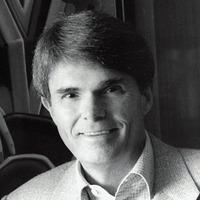
Dean Koontz
Dean Koontz

Renowned American author known for his suspense and horror novels. He has been writing since the 1970s and his works have been widely popular, winning numerous international awards. more

You May Also Like

“Flowers, trees, and leaves are all gorgeous expressions of nature’s innate joy. Notice the bounty surrounding you.”

“This new situation, in which "humanity" has in effect assumed the role formerly ascribed to nature or history, would mean in this context that the right to have rights, or the right of every individual to belong to humanity, should be guaranteed by humanity itself. It is by no means certain whether this is possible. For, contrary to the best-intentioned humanitarian attempts to obtain new declarations of human rights from international organizations, it should be understood that this idea transcends the present sphere of international law which still operates in terms of reciprocal agreements and treaties between sovereign states; and, for the time being, a sphere that is above the nation does not exist. Furthermore, this dilemma would by no means be eliminated by the establishment of a "world government." Such a world government is indeed within the realm of possibility, but one may suspect that in reality it might differ considerably from the version promoted by idealistic-minded organizations. The crimes against human rights, which have become a specialty of totalitarian regimes, can always be justified by the pretext that right is equivalent to being good or useful for the whole in distinction to its parts. (Hitler's motto that "Right is what is good for the German people" is only the vulgarized form of a conception of law which can be found everywhere and which in practice will remain effectual only so long as older traditions that are still effective in the constitutions prevent this.) A conception of law which identifies what is right with the notion of what is good for—for the individual, or the family, or the people, or the largest number—becomes inevitable once the absolute and transcendent measurements of religion or the law of nature have lost their authority. And this predicament is by no means solved if the unit to which the "good for" applies is as large as mankind itself. For it is quite conceivable, and even within the realm of practical political possibilities, that one fine day a highly organized and mechanized humanity will conclude quite democratically—namely by majority decision—that for humanity as a whole it would be better to liquidate certain parts thereof.”

“The plan is a simple one which has been in existence for nearly three hundred years. Delete all white fighting age men, then the UN will takeover to form the One World Government. Death to white soldiers by poison jabs and wars. Both do not apply to the fighting age "refugees" who will form a significant part of the great replacement.”