Quotessence
Home / Quotes / Quote by Joyce Cary

Quote by Joyce Cary

“I will admit that I wanted to shout for standing on the top of a scaffold in front of a good new wall always goes to my head. It is a sensation something between that of an angel let out of his cage into a new sky and a drunkard turned loose in a royal cellar. And after all, what nobler elevation could you find in this world than the scaffold of a wall painter? No admiral on the bridge of a new battleship designed by the old navy, could feel more pleased with himself than Gulley, on two planks, forty feet above dirt level, with his palette table beside him, his brush in his hand, and the draught blowing up his trousers; cleared for action.”

Quote by Joyce Cary

Work

THE HORSE'S MOUTH

The Horse's Mouth is a satirical novel that delves into the complexities of human nature, particularly the tendency to deceive oneself. The narrative is centered around a writer who struggles with authenticity and the search for truth in his own life and work. more

Author

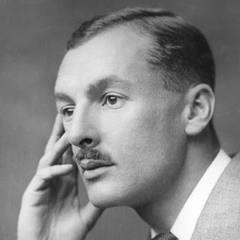
Joyce Cary
Joyce Cary

Joyce Cary was a British novelist known for his intricate explorations of human relationships and the social dynamics of his era. Born on December 7, 1888, in Bombay, India, Cary spent a significant part of his life in Nigeria before returning to England. His most celebrated novel, 'Mister Johnson,' was published in 1932 and is regarded as a classic of English literature. more

You May Also Like

“...I thought, with a certain amount of sorrow, how much enormous talent there must be in the world for nature simply to toss it away so arbitrarily! But nature could not care less what we think about it, and as far as talent is concerned, there is such an excess that our artists will soon become their own audiences, and audiences made up of ordinary people will no longer exist.”

“Some centuries ago they had Raphael and Michael Angelo; now we have Mr. Paul Delaroche, and all because we are progressing. You brag of your Opera houses; ten Opera houses the size of yours could dance a saraband in a Roman amphitheatre. Even Mr. Martin, with his lame tiger and his poor gouty lion, as drowsy as a subscriber to the Gazette, cuts a pretty small figure by the side of a gladiator from antiquity. What are your benefit performances, lasting till two in the morning, compared with those games which lasted a hundred days, with those performances in which real ships fought real battles on a real sea; when thousands of men earnestly carved each other -- turn pale, O heroic Franconi! -- when, the sea having withdrawn, the desert appeared, with its raging tigers and lions, fearful supernumeraries that played but once; when the leading part was played by some robust Dacian or Pannonian athlete, whom it would often have been might difficult to recall at the close of the performance, whose leading lady was some splendid and hungry lioness of Numidia starved for three days? Do you not consider the clown elephant superior to Mlle. Georges? Do you believe Taglioni dances better than did Arbuscula, and Perrot better than Bathyllus? Admirable as is Bocage, I am convinced Roscius could have given him points. Galeria Coppiola played young girls' parts, when over one hundred years old; it is true that the oldest of our leading ladies is scarcely more than sixty, and that Mlle. Mars has not even progressed in that direction. The ancients had three or four thousand gods in whom they believed, and we have but one, in whom we scarcely believe. That is a strange sort of progress. Is not Jupiter worth a good deal more than Don Juan, and is he not a much greater seducer? By my faith, I know not what we have invented, or even wherein we have improved.”

“Le créateur, ou l´artiste, ne se contente pas de produire un objet utile, mais il investit cet objet de sa subjectivité, de son ressenti personnel: il va incarner dans son oeuvre son 'idea', c´est-à-dire le projet, la vision qu´il porte en lui et dans laquelle d´autres vont se retrouver, car la création artistique, acte gratuit, sans "utilité" réelle, est une activité symbolique qui s´adresse au plus profond de l´être. D´ailleurs, pour la qualifier, nous utilisons le language du coeur et de l´âme: face à une oeuvre d´art nous nous déclarons "émus", "touchés", "bouleversés". Ce n´est pas l´usage que nous pouvons en faire qui nous interpelle mais sa dimension esthétique et symbolique gratuite.”