Quotessence
Home / Quotes / Quote by Victor Hugo

Quote by Victor Hugo

Work

Les Misérables

Victor Hugo's 'Les Misérables' is an epic narrative that delves into the lives of various characters, including Jean Valjean, a former convict seeking redemption, and Fantine, a woman struggling in poverty. The story is rich in historical detail and moral complexity, offering a profound examination of society's flaws and the resilience of the human spirit. more
Author

Victor Hugo
Victor Hugo

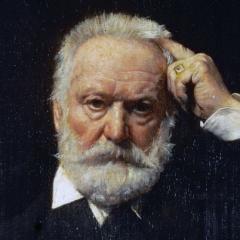
Victor Hugo, a French romantic poet, novelist, and playwright, was born on February 26, 1802, and died on May 22, 1885. He is considered one of the greatest writers in French literary history, known for his profound humanistic concerns and rich imagination. more

You May Also Like

“This is stupid." "Look. You think how stupid people are most of the time. Old men drink. Women at a village fair. Boys throwing stones at birds. Life. The foolishness and the vanity, the selfishness and the waste. The pettiness, the silliness. You think in war it must be different. Must be better. With death around the corner, men united against hardship, the cunning of the enemy, people must think harder, faster, be...better. Be heroic. Only it's just the same. In fact do you know, because of all that pressure, and worry, and fear, it's worse. There aren't many men who think clearest when the stakes are highest. So people are even stupider in war than the rest of the time. Thinking about how they'll dodge the blame, or grab the glory, or save their skins, rather than about what will actually work. There's no job that forgives stupidity more than soldiering. No job that encourages it more.”

“I did not say anything. I was always embarrassed by the words sacred, glorious, and sacrifice and the expression in vain. We had heard them, sometimes standing in the rain almost out of earshot, so that only the shouted words came through, and had read them on proclamations that were slapped up by billposters over other proclamations, now for a long time, and I had seen nothing sacred, and the things that were glorious had no glory and the sacrifices were like the stock yards at Chicago if nothing was done with the meat except to bury it.”

“She (the little Naga woman – Ma Roi) told him (Captain Gribble) of hundreds of refugees being held up at the Namyung river, and planes unable to drop supplies because of the weather: “Please hurry to Tagap Ga,” she pleaded, “We will show you the way. All the rivers will soon be in flood, trees will be blown down, the track curling up and down the steep sides of the mountain will be obliterated.” She concluded with great emphasis, “There are four big rivers to cross!”. “The situation is becoming dreadfully complicated by the weather,” I said to myself, “the outlook is horrible.”

“Padre Crittle: … we heard on a radio jettisoned by one of the forestry men, the broadcast of Sir Reginald Dormal-Smith, the Governor of Burma. Speaking from Delhi he told the world just how well everything had been organized and how magnificently everyone had stuck to their posts. We who were in the middle of the chaos were “not amused” and loud were the jeers with which his speech was greeted: officers and civilians alike united in making caustic comments on British propaganda …”