Quotessence
Home / Quotes / Quote by Shlomo Sand

Quote by Shlomo Sand

“The fine and varied literature that I read was almost all in translation: from classic works by Jack London, Victor Hugo and Charles Dickens, to detective stories by Arthur Conan Doyle, Agatha Christie and Georges Simenon, not to mention fascinating pornographic books. I also appreciated the biblical stories that contained all three genres.”

Quote by Shlomo Sand

Work

La fin de l'intellectuel français ?

Browse quotes and source details for this work. more

Author
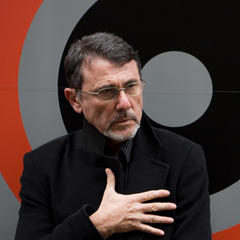
Shlomo Sand
Shlomo Sand

Shlomo Sand (born September 10, 1946) is an Israeli historian and professor emeritus at Tel Aviv University. He is best known for his controversial books The Invention of the Jewish People (2008) and The Invention of the Land of Israel (2012), which challenge traditional Jewish national narratives. Born in Linz, Austria, to Polish Jewish Holocaust survivors, Sand moved to Israel in 1948. He studied history at Tel Aviv University and earned his PhD from the École des Hautes Études en Sciences Sociales in Paris. His research focuses on nationalism, historiography, and the Israeli-Palestinian conflict. Sand's works have sparked intense debate, with critics accusing him of anti-Zionism, while supporters praise his revisionist approach. He argues that Jewish national identity is a modern construct and calls for rethinking Israel's Jewish character. more

You May Also Like

“When I read the stories in the Bible about people such as Sarah, Jacob, or David, what stands out is not their virtue but their very strong wants. Sarah wanted her son to prevail over Hagar's son, Jacob wanted his older brother's blessing, and David wanted Bathsheba. While these cravings clearly bought them all kinds of well-deserved trouble, they also kept these characters very, very alive. Their desires propelled them in ways that God could use, better than God could use those who never colored outside the lines.”

“Like most Christians, I have my own canon, in which I hear God speaking most directly to me, but I also like the parts in which God sounds like an alien, since those parts remind me that God does not belong to me. I do not pretend to read the Bible any more objectively than those who wrote it for me. To read it literally strikes me as a terrible refusal of their literary gifts. I will keep the Bible, which remains the Word of God for me, but always the Word as heard by generations of human beings as flawed as I. As beautifully as these witnesses write, their divine inspiration can never be separated from their ardent desires; their genuine wish to serve God cannot be divorced from their self-interest. That God should use such blemished creatures to communicate God's reality so well makes the Bible its own kind of miracle, but I hope never to put the book ahead of the people whom the book calls me to love and serve. I will keep the Bible as a field guide, which was never intended to be a substitute for the field.”

“Quante volte abbiamo sostituito il dolore con la colpa...quante volte i sensi di colpa hanno appesantito il passo della vita smarrendo il significato dello scandire di un tempo generoso in cui la bellezza cresce, nella pazienza, nel ristoro, nell'attesa...eppure a volte il dolore può essere il dono vissuto di una grazia, di un silenzio che rompe il nostro guscio e consente alla Bellezza di venir fuori. Come un giardino, mai abbandonato, dalle cui crepe emerge la luce e il profumo dolce della zagara...”

“The evidence that the big bang was God's method of creation is compelling for many reasons. For instance, it reveals the very nature of God, just as Romans 1:20 says creation should. It doesn't just reveal God's character to those who already believe in him or to those who only look superficially at nature; it reveals the very nature of his character to those who study the universe in depth. It drives people to realize that the creator is a transcendent designer who cares for humanity. It leaves them truly without excuse because they have rejected the creator, not for the record of creation.”

“Theists like myself have invoked the Big Bang and the anthropic principle as evidence for God for decades and over those years the observational evidence has increased, not decreased. Scientific evidence that supports the hypothesis of a creator God is more abundant than ever and, I confidently predict, that as we learn more about the origin of the universe this trend will continue.”