Quotessence
Home / Quotes / Quote by John Steinbeck

Quote by John Steinbeck

Work

East of Eden

John Steinbeck's 'East of Eden' is a profound and complex narrative that delves into the lives of the Joad family as they navigate the challenges of their time. The story is rich with symbolism and philosophical musings, offering a rich tapestry of human emotions and societal struggles. more
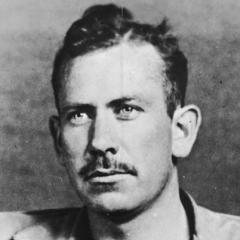
Author

John Steinbeck
John Steinbeck

John Steinbeck was an American author renowned for his profound depiction of American society and the lives of farmers. His works often explore themes of poverty, social injustice, and human nature. Steinbeck was awarded the Nobel Prize in Literature in 1962 for his significant contribution to American literature. more

You May Also Like

“Мы были счастливы сегодня потому, что мы были счастливы, или потому, что были счастливы когда-то, давным-давно? Не похоже ли наше нынешнее счастье на свет луны, которая холодна и светит не своим светом, а чужим, пришедшим издалека?”

“...к тому времени, когда мы поймем, каково наше место в жизни и какое определение мы дали себе, уже поздно выбираться из привычной колеи. Мы можем только жить в рамках самоопределения – как преступник в клетке, где он не может ни лечь, ни сесть, ни встать, а подвешен именем закона на обозрение толпе. Однако определение, которое мы себе даем, – это мы. Чтобы вырваться из него, мы должны претвориться в новую личность. Но как можно сотворить из самого себя нового себя, если самость – единственный материал, которым мы располагаем?”

“Each time we talk, he listens to me ramble, then he tries to pass on some sort of life lesson. He warns me that money is not the most important thing, contrary to the popular view on campus. He tells me I need to be "fully human." He speaks of the alienation of youth and the need for "connectedness" with the society around me.”

“We see that in the organic world, to the same degree that reflection gets darker and weaker, grace grows ever more radiant and dominant. But just as two lines intersect on one side of a point, and after passing through infinity, suddenly come together again on the other side; or the image in a concave mirror suddenly reappears before us after drawing away into the infinite distance, so too, does grace return once perception, as it were, has traversed the infinite--such that it simultaneously appears the purest in human bodily structures that are either devoid of consciousness or which possess an infinite consciousness, such as in the jointed manikin or the god.”

“[On Schopenhauer in Black and White] Schopenhauer's views of love are flawed. Love can't be merely an illusion of the mind to aid in procreation, but the path to redemption for an otherwise violently selfish species. Past human greatness has proven that when challenged, love can overpower impulsive instinct, and in essence, the vilest aspects of our nature.”