Quotessence
Home / Quotes / Quote by Khaled Hosseini

Quote by Khaled Hosseini

Work

A Thousand Splendid Suns

This novel delves into the lives of two women in Afghanistan, highlighting their struggles and triumphs amidst political turmoil and personal tragedy. The narrative weaves through decades, showcasing the evolving dynamics of their relationships and the resilience of the human spirit in a challenging environment. more

Author
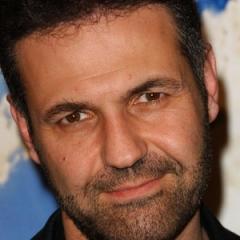
Khaled Hosseini
Khaled Hosseini

Khaled Hosseini is an Afghan-American novelist, best known for his novel 'The Kite Runner,' which has become a global bestseller. The story, centered around themes of friendship, betrayal, and redemption, has resonated with readers worldwide. Hosseini's works often focus on the history and culture of Afghanistan, as well as the complexities of human nature. more

You May Also Like

“For the same reason there is nowhere to begin to trace the sheaf or the graphics of differance. For what is put into question is precisely the quest for a rightful beginning, an absolute point of departure, a principal responsibility. The problematic of writing is opened by putting into question the value of the arkhe. What I will propose here will not be elaborated simply as a philosophical discourse, operating according to principles, postulates, axioms, or definitions, and proceeding along the discursive lines of a linear order of reasons. In the delineation of differance everything is strategic and adventurous. Strategic because no transcendent truth present outside the field of writing can govern theologically the totality of the field. Adventurous because this strategy is a not simple strategy in the sense that strategy orients tactics according to a final goal, a telos or theme of domination, a mastery and ultimate reappropriation of the development of the field. Finally, a strategy without finality, what might be called blind tactics, or empirical wandering if the value of empiricism did not itself acquire its entire meaning in opposition to philosophical responsibility. If there is a certain wandering in the tracing of differance, it no more follows the lines of philosophical-logical discourse than that of its symmetrical and integral inverse, empirical-logical discourse. The concept of play keeps itself beyond this opposition, announcing, on the eve of philosophy and beyond it, the unity of chance and necessity in calculations without end.”

“Every time I talk to a writer, I realize why most books are so bad. And I do read a lot. I would say my books are the type of books I wished I had found in my life. Many times I am not even aware of the quality of what I write until I search for better information, in all human history, and can't find anything. People are still battling ideas and opinions. Many have no clue of the difference between facts and opinions. Many don't even consider facts to be real. But I guess all these things are great news for the pharmaceutical industry. Their profits seem to double every year.”

“Facts,” murmured Basil, like one mentioning some strange, far-off animals, “how facts obscure the truth. I may be silly—in fact, I'm off my head—but I never could believe in that man—what's his name, in those capital stories?—Sherlock Holmes. Every detail points to something, certainly; but generally to the wrong thing. Facts point in all directions, it seems to me, like the thousands of twigs on a tree. It's only the life of the tree that has unity and goes up—only the green blood that springs, like a fountain, at the stars.”