Quotessence
Home / Quotes / Quote by E. Lockhart

Quote by E. Lockhart

Work

We Were Liars

In this suspenseful story, a young woman reflects on her privileged upbringing and the mysterious events that occurred during her summers on Martha's Vineyard. The novel delves into the complexities of family dynamics and the lasting impact of secrets kept hidden. more
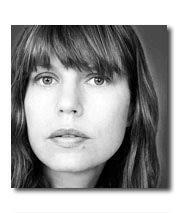
Author

E. Lockhart
E. Lockhart

E. Lockhart, born on September 13, 1967, is an American author renowned for her young adult literature. Her works are known for their unique style and popularity among readers. more

You May Also Like

“Honest men are so very rare, they are often mistaken for criminals, for rebels, for madmen. What were your crimes, anyway, but to be different?' 'Robbery the first time, and I served seven years. When they caught me again there were eighty-four counts, with fourteen murders.' Cosca cocked an eyebrow. 'But we're you truly guilty?' 'Yes' He frowned for a moment then waved it away. 'Nobody's perfect. Lets leave the past behind us.”

“He had sworn a thousand times to kill her, but Cosca had broken all manner of oaths in his life, and the sight of her brought no rage. Instead what welled up in him was a mixture of worn-out self-pity, sappy joy and, most of all, piercing shame at seeing in her face how far he had fallen. He felt the ache in his nose, behind his cheeks, tears welling in his stinging eyes. For once he was grateful that they were red as wounds at the best of times. If he wept, no once could tell the difference.”

“The hour of spring was dark at last, sensuous memories of sunlight past, I stood alone in garden bowers and asked the value of my hours. Time was spent or time was tossed, Life was loved and life was lost. I kissed the flesh of tender girls, I heard the songs of vernal birds. I gazed upon the blushing light, aware of day before the night. So let me ask and hear a thought: Did I live the spring I’d sought? It's true in joy, I walked along, took part in dance, and sang the song. and never tried to bind an hour to my borrowed garden bower; nor did I once entreat a day to slumber at my feet. Yet days aren't lulled by lyric song, like morning birds they pass along, o'er crests of trees, to none belong; o'er crests of trees of drying dew, their larking flight, my hands, eschew Thus I’ll say it once and true... From all that I saw, and everywhere I wandered, I learned that time cannot be spent, It only can be squandered.”

“Western culture has endlessly represented the ways in which love miraculously erupts in people’s lives, the mythical moment in which one knows someone is destined to us; the feverish waiting for a phone call or an email, the thrill that runs our spine at the mere thought of him or her. To be in love is to become an adept of Plato, to see through a person an Idea, perfect and complete.2 Endless novels, poems, or movies teach us the art of becoming Plato’s disciples, loving the perfection manifested by the beloved. Yet, a culture that has so much to say about love is far more silent on the no-less-mysterious moment when we avoid falling in love, where we fall out of love, when the one who kept us awake at night now leaves us indifferent, when we hurry away from those who excited us a few months or even a few hours ago. This silence is all the more puzzling as the number of relationships that dissolve soon after their beginning or at some point down along their emotional line is staggering.Perhaps our culture does not know how to represent or think about this because we live in and through stories and dramas, and “unloving” is not a plot with a clear structure. More often than not it does not start with an inaugural moment, a revelation. On the contrary, some relationships fade or evaporate before or soon after they properly started, while others end with slow and incomprehensible death.”