Quotessence
Home / Quotes / Quote by Philip Pullman

Quote by Philip Pullman

“With every second that went past, with every sentence she spoke, she felt a little strength flowing back. And now that she was doing something difficult and familiar and never quite predictable, namely lying, she felt a sort of mastery again, the same sense of complexity and control that the alethiometer gave her. She had to be careful not to say anything obviously impossible; she had to be vague in some places and invent plausible details in others; she had to be an artist, in short.”

Quote by Philip Pullman

Work

The Golden Compass

Browse quotes and source details for this work. more

Author

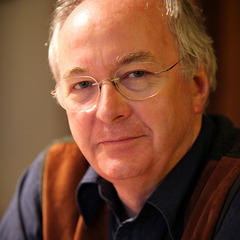
Philip Pullman
Philip Pullman

Philip Pullman is a British film writer known for his adaptations of literary works. Born in October 1946, he is a prolific writer who has adapted several renowned novels into film scripts. more

You May Also Like

“A few hours later, the five-year-old girl who'd presented with diarrhea, weight loss, and terrible stomach cramping was throwing up a foot-long worm into a bucket and looking very pleased with herself. She spoke not a word of English but kept pointing to herself then the worm then herself and grinning. Her mother, who also spoke not a word of English, was doing the same, gesticulating wildly back and forth between daughter and worm, but her face wore the opposite expression. She was not screaming in a language Rosie knew, but she understood clear as lagoons anyway the mother's horror of his worm that had lately come out of her little girl. If they'd spoken the same language, Rosie would have laid her hand on the woman's shoulder to commiserate: Oh the things that hide secretly in our children, lying in wait, doing untold damage, yearning to be free. Alarming us beyond all measure.”

“Parents often complain that their adult childhood won't let them change. Children don't want their parents to move from the home in which they grew up, or convert their old bedrooms into offices. They refuse to take their cartons out of the attic or basement and become angry at even the suggestion that their parents might show them away. We are more focused on our parents as the repositories of our childhoods, which we want to hold on to, than on the sacrifices they made for us that they might no longer want to make—such as using their own bedroom or the dining rooms as an office so we could have a bedroom.”

“These are the things they don't tell you about motherhood. How after a lifetime of struggling to love yourself it will be an absolute miracle to love these babies so wholly and unconditionally, sure. But also how they will love themselves the same way, at least at first, and in that maybe you will find a level of healing that all the therapy and self-help in the world couldn't get you to because you will realize at some point you must have loved yourself the very same way. Or how seeing the way they are so comfortable in their own skin, the way they strut around so confident in the fact that they are the masterpiece we too believe them to be, will make all the wok we've done trying to suck it all in or hide it or simply avoid looking at it in the mirror seem kind of silly. Because of course it is. It's against everything we were born knowing.”