Quotessence
Home / Quotes / Quote by Aleister Crowley

Quote by Aleister Crowley

“...we have no right to decide off-hand that it is an unnatural pleasure to eat sawdust. A man might be constituted so that he liked it. And so long as his peculiarity doesn't damage or interfere with other people, there's no reason why he shouldn't be left alone. But if it is the man's fixed belief that sawdust eating is essential to human happiness; if he attributes almost everything that happens either to the effects of eating it or not eating it; if he imagines that most of the people he meets are also sawdust-eaters, and above all, if he thinks that the salvation of the world depends entirely upon making laws to compel people to eat sawdust, whether they like it or not, then it is fair to say that his mind is unbalanced on the subject; and that, further, the practice itself, however innocent it may appear, is in that particular case perverse. Sanity consists in the proper equilibrium of ideas in general. That is the only sense in which it is true that genius is connected with insanity.”

Quote by Aleister Crowley

Work

Diary of a Drug Fiend

Browse quotes and source details for this work. more

Author
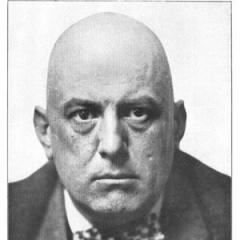
Aleister Crowley
Aleister Crowley

Aleister Crowley, a British poet, mystic, and writer, was born on October 12, 1875, and died on December 1, 1947. He is known for his poetic works and mystical practices, and is considered one of the most controversial figures of the 20th century. more

You May Also Like

“Right as the Mexican Drug War rages, the debate is reaching the second great flux in its history. The first came in the seventies, with the Jimmy Carter White House. Legalization advocates, including various doctors, got into key government positions, their papers got play, their ideas gained currency. States began to decriminalize marijuana and cocaine was viewed in the media as a happy-go-lucky party drug. Reformers thought they had won the debate. They were wrong. In the eighties, America lashed back against narcotics with a vengeance, and in the nineties the drug war went on steroids. The crack epidemic broke out, celebrities died of overdoses, and lots of middle-class parents got concerned about lots of middle-class kids on smack, speed, and sensimilla. In the early 1990s, surveys found large numbers of Americans thought drugs were the number one problem the country faced. The media was packed with stories of crack babies, cracked-up gangbangers, and nice white kids turning into demons on drugs. But that was two decades ago. The pendulum has swung back again. For now. Most people don’t even list drugs in their top ten of America’s problems. The economy is most people’s priority, and terrorism, immigration, crime, religion, abortion, gay marriage, and the environment all spark more concern than narcotics. Meanwhile, drug-policy reformers have emerged strengthened with propositions to decriminalize, spread medical use, and finally fully legalize marijuana. Proposition 19 to legalize cannabis in California narrowly missed passing, getting 46.5 percent in the 2010 vote. Activists are determined it will pass in 2012. And if not, in 2014. Or 2016. They can just keep on going.”

“My pray-without-ceasing experiment had all but proven the impossibility of controlling my thoughts. I could control one layer, the most readily available layer, but there was always a sublayer lurking. That sublayer was truer, more immediate, more essential, than anything else. It spoke softly but constantly, and the things it said were the very things that allowed me to live and to be. Now I understand that I have a subconscious life, vibrant and vital, that acts in spite of "ourselves," our conscious selves.”