Quotessence
Home / Quotes / Quote by Ovid

Quote by Ovid

Work

Metamorphoses

Ovid's Metamorphoses is a comprehensive narrative of Greek and Roman mythology, told through a series of transformations and adventures. The collection spans a wide range of characters and stories, including the creation of the world, the adventures of gods and heroes, and the tales of mortals who become gods. The work is notable for its poetic style and its exploration of themes such as love, power, and fate. more
Author

Ovid
Ovid

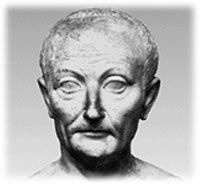
Ovid, born on March 20, 43 BC and died in 1 BC, was a renowned Roman poet of the ancient world. His works are diverse, including love poems, mythological poems, and satirical poems, with 'Metamorphoses' being his most famous work. more

You May Also Like

“The fact that God can bring character development and personal growth out of any situation is conditional on people's willingness to submit to God's will. God is sovereign over every life, but those who yield their will to him will be shaped according to his purposes. When God directs a life for his purposes, all of life is a school. No experience, good or bad, is ever wasted (Rom. 8:28). God doesn't squander people's time. He doesn't ignore their pain. He brings not only healing but growth out of even the worst experiences. Every relationship can be God's instrument to mature a person's character.”

“Sincere and unspiteful laughter is mirth, but where is there any mirth in our time, and do people know how to be mirthful?... A man's mirth is a feature that gives away the whole man, from head to foot. Someone's character won't be cracked for a long time then the man bursts out laughing somehow quite sincerely, and his whole character suddenly opens up as if on the flat of your hand. Only a man of the loftiest and happiest development knows how to be mirthful infectiously, that is, irresistibly and goodheartedly. I'm not speaking of his mental development, but of his character, of the whole man. And so, if you want to discern a man and know his soul, you must look, not at how he keeps silent, or how he speaks, or how we weeps, or even how he is stirred by the noblest ideas, but you had better look at him when he laughs. If a man has a good laugh, it means he's a good man.”

“You claim that the evidentiary miracle is present and available, namely, the Koran. You say: 'Whoever denies it, let him produce a similar one.' Indeed, we shall produce a thousand similar, from the works of rhetoricians, eloquent speakers and valiant poets, which are more appropriately phrased and state the issues more succinctly. They convey the meaning better and their rhymed prose is in better meter. … By God what you say astonishes us! You are talking about a work which recounts ancient myths, and which at the same time is full of contradictions and does not contain any useful information or explanation. Then you say: 'Produce something like it'‽”