Quotessence
Home / Quotes / Quote by William Faulkner

Quote by William Faulkner

“Only a man of Colonel Sartoris’ generation and thought could have invented it, and only a woman could have believed it.”

Quote by William Faulkner

Author
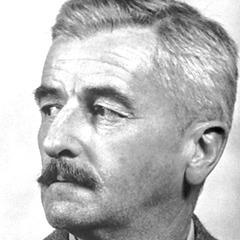
William Faulkner
William Faulkner

William Faulkner, an American writer born on September 25, 1897, and died on July 6, 1962. Known for his unique narrative techniques and profound descriptions of Southern society and history, Faulkner is considered one of the great novelists of the 20th century. more

You May Also Like

“There are two things that could survive a nuclear war: cockroaches and the myth of the gender pay gap. … young women who don’t have kids are outearning their male peers. According to data from the U.S. Census Bureau’s American Community Survey, unmarried, childless females under age 30 who live in cities earn 8 percent more than their male peers in 147 of 150 U.S. cities. In Atlanta and Memphis, the figure is approximately 20 percent more, while young women in New York City, Los Angeles, and San Diego make 17 percent, 12 percent, and 15 percent more, respectively. Besides, even if men and women do earn different sums, statistical disparity doesn’t always mean discrimination—sometimes they are the reward for life choices, which is fair. This is good news, unless you crave victimhood.”

“At the same time, however, the collective behavior of Reserve Police Battalion 101 has deeply disturbing implications. There are many societies afflicted by traditions of racism and caught in the siege mentality of war or threat of war. Everywhere society conditions people to respect and defer to authority, and indeed could scarcely function otherwise. Everywhere people seek career advancement. In every modern society, the complexity of life and the resulting bureaucratization and specialization attenuate the sense of personal responsibility of those implementing official policy. Within virtually every social collective, the peer group exerts tremendous pressures on behavior and sets moral norms. If the men of Reserve Battalion 101 could become killers under such circumstances, what group of men cannot?”

“What, then, is one to conclude? Most of all, one comes away from the story of Reserve Police Battalion 101 with great unease. This story of ordinary men is not the story of all men. The reserve policemen faced choices, and most of them committed terrible deeds. But those who killed cannot be absolved by the notion that anyone in the same situation would have done as they did. For even among them, some refused to kill and others stopped killing. Human responsibility is ultimately an individual matter.”

“Ur nattomhöljda tider emot ett mål, fördolt för dig, o mänsklighet, du skrider i sekler fram din ökenstig! Din dag är blott en strimma, som lyser blek och matt - se, framom henne dimma och bakom henne natt! Och släkten, där du tågar, i öknen segna ned, och bävande du frågar: allsmäktige vart bär min led?”

“Ma se sei un uomo in un qualsiasi tempo futuro, e ce l’hai fatta sin qui, ti prego ricorda: non sarai mai soggetto alla tentazione del perdono, tu uomo, come lo sarà una donna. È difficile resistere, credimi. Ricorda, però, che anche il perdono è un potere. Chiederlo è un potere, e negarlo o concederlo è un potere, forse il più grande.”