Quotessence
Home / Quotes / Quote by Arthur Koestler

Quote by Arthur Koestler

Work

The Ghost in the Machine

Browse quotes and source details for this work. more

Author
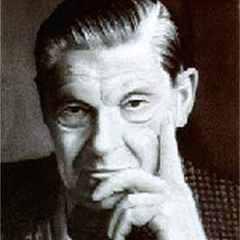
Arthur Koestler
Arthur Koestler

Arthur Koestler was a Hungarian-British author, journalist, and political activist. He is renowned for his novel 'Darkness at Noon' and his involvement in the Spanish Civil War. Koestler's writings frequently delved into the themes of totalitarianism and the individual's resistance to oppression. more

You May Also Like

“But other hordes would come, and other false prophets. Our feeble efforts to ameliorate man’s lot would be but vaguely continued by our successors; the seeds of error and of ruin contained even in what is good would, on the contrary, increase to monstrous proportions in the course of centuries. A world wearied of us would seek other masters; what had seemed to us wise would be pointless for them, what we had found beautiful they would abominate. Like the initiate to Mithraism the human race has need, perhaps, of a periodical bloodbath and descent into the grave. I could see the return of barbaric codes, of implacable gods, of unquestioned despotism of savage chieftains, a world broken up into enemy states and eternally prey to insecurity. Other sentinels menaced by arrows would patrol the walls of future cities; the stupid, cruel, and obscene game would go on, and the human species in growing older would doubtless add new refinements of horror. Our epoch, the faults and limitations of which I knew better than anyone else would perhaps be considered one day, by contrast, as one of the golden ages of man.”

“I've an insatiable craving inside me that consumes everything and makes me regard the sufferings and joys of others only in their relationship to me, as food to sustain my spiritual powers. I am no longer capable of loosing my head in love, Ambition has been crushed in me by circumstances, but it has come out in another way, for ambition is nothing but a lust for power and my chief delight is to dominate those around me. To inspire in others love, devotion, fear - isn't that the first symptom and the supreme triumph of power? To cause another person suffering or joy, having no right to do so - isn't that the sweetest food of pride?”

“Say "no" to corruption; it does not fit you! Say "no" to bad leadership; you don't fit there. Say "no" to immorality; it will only fake you! Be bold to say "no" if that is what will take your breakfast away; you will get a sweeter lunch pack for compensation sooner.”

“If I beat my grandmother to death to-morrow in the middle of Battersea Park, you may be perfectly certain that people will say everything about it except the simple and fairly obvious fact that it is wrong. Some will call it insane; that is, will accuse it of a deficiency of intelligence. This is not necessarily true at all. You could not tell whether the act was unintelligent or not unless you knew my grandmother. Some will call it vulgar, disgusting, and the rest of it; that is, they will accuse it of a lack of manners. Perhaps it does show a lack of manners; but this is scarcely its most serious disadvantage. Others will talk about the loathsome spectacle and the revolting scene; that is, they will accuse it of a deficiency of art, or æsthetic beauty. This again depends on the circumstances: in order to be quite certain that the appearance of the old lady has definitely deteriorated under the process of being beaten to death, it is necessary for the philosophical critic to be quite certain how ugly she was before. Another school of thinkers will say that the action is lacking in efficiency: that it is an uneconomic waste of a good grandmother. But that could only depend on the value, which is again an individual matter. The only real point that is worth mentioning is that the action is wicked, because your grandmother has a right not to be beaten to death. But of this simple moral explanation modern journalism has, as I say, a standing fear. It will call the action anything else—mad, bestial, vulgar, idiotic, rather than call it sinful.”

“... on the historical scale, the damages wrought by individual violence for selfish motives are insignificant compared to the holocausts resulting from self-transcending devotion to collectively shared belief-systems. It is derived from primitive identification instead of mature social integration; it entails the partial surrender of personal responsibility and produces the quasi-hypnotic phenomena of group-psychology.”