Quotessence
Home / Quotes / Quote by Meher Baba

Quote by Meher Baba

“If drugs could make one realise God, then God is not worthy of being God. No Drugs! Many people in India smoke hashish and ganja, they colours and forms and lights and it makes them elated. But this elevation is only temporary, it is a false experience of illusion, and serves to take one further away from reality.”

Quote by Meher Baba

Work

Selected Messages of Meher Baba

Browse quotes and source details for this work. more

Author
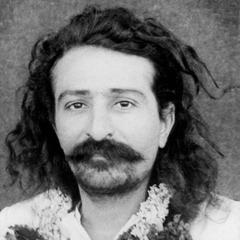
Meher Baba
Meher Baba

Meher Baba was a mystic and spiritual leader from India. His life was filled with mystery and legend, and he was considered a mentor with extraordinary abilities. Meher Baba's philosophy of life emphasizes inner spiritual growth and self-realization, and his teachings have had a profound impact on many people worldwide. more

You May Also Like

“There is the rather strange coincidence of that at Shirdi, Sakori and Meherabad, the deaths of the venerated saints were believed to change nothing for the devotees. The venerated deceased entities were somehow still alive. Rivalries between sects continued, one difference being that there was no stress on miracles at Meherabad. If one is prepred to credit in any way the relevance of Shirdi Sai, Upasni Maharaj and Meher Baba as mystics, then it is evident that their teachings differed. Their policies differed also. Such details tend to confound the issue of a 'perennial philosophy' as popularly promoted by various writers. One possible conclusion afforded is that the underlying impact of the saint/master is circumscribed by audience capacities, and shaped by some extent by their own temperament.”

“Starting from the source of vibrant Consciousness, the first two tattvas of Shaivism are (1) Shiva tattva and (2) Shakti tattva. It is important to understand at the beginning that these two tattvas are only linguistic conventions and are not actually part of creation. According to the deep yogic experience of the sages of this philosophy, there is no difference between Shiva tattva and Shakti tattva. They are both actually one with Paramasiva. They are considered to be two tattvas only for the convenience of philosophical thinking and as a way of clarifying the two aspects of the one absolute reality, Paramasiva. These two aspects are Shiva, the transcendental unity, and Shakti, the universal diversity. The changeless, absolute and pure consciousness is Shiva, while the natural tendency of Shiva towards the outward manifestation of the five divine activities is Shakti. So, even though Shiva is Shakti, and Shakti is Shiva, and even though both are merely aspects of the same reality called Paramasiva, still, these concepts of Shiva-hood and Shakti-hood are counted as the first two tattvas. These two tattvas are at the plane of absolute purity and perfect unity. — B. N. Pandit, Specific Principles of Kashmir Shaivism (3rd ed., 2008), p. 73.”

“It is important to understand that, according to Kashmir Shaivism, this analysis of all phenomena into thirty six tattvas is not an absolute truth. It has been worked out by the authors of the philosophy as a tool of understanding for the ever-active and inquiring mind and as a form for contemplative meditation. Through further analysis, the number of tattvas can be increased to any level. Similarly, through synthesis, they can be decreased down to one tattva alone. In fact this has been done in the Tantraloka, where one can find doctrines of contemplation on fifteen, thirteen, eleven, nine, seven, five, and as few as three tattvas as well. The practitioners of the Trika system use only three tattvas in the process of a quick sadhana: Shiva representing the absolute unity, Shakti representing the link between duality and unity, and Nara representing the extreme duality. [Shakti is the path through which Shiva descends to the position of Nara and the latter ascends to the position of Shiva.] Finally, a highly advanced Shiva yogin sees only the Shiva tattva in the whole of creation. However, since the contemplative practice of tattvadhvadharana used in anava upaya includes meditation on all thirty sex tattvas, that is the number commonly accepted by the Shaivas of both northern and southern India. — B. N. Pandit, Specific Principles of Kashmir Shaivism (3rd ed., 2008), p. 79.”

“The essential nature of samvit is the subtle stir of spanda. The introverted and extroverted movements of spanda cause samvit to manifest itself in both the noumenal and phenomenal aspects of creation. These two aspects of samvit are known in Shaivism as Shiva (transcendent) and Shakti (universal). Shiva and Shakti are the two names given to the monistic Absolute (Paramasiva) when it is being considered in its dual aspects of eternal and transcendent changelessness (Shiva), and the ever-changing and immanent manifestation of universal appearances (Shakti). — B. N. Pandit, Specific Principles of Kashmir Shaivism (3rd ed., 2008), p. 17–18.”

“We live and enjoy the vitality (virya) of consciousness to the degree in which we are sensitive to the beauty of things around us. Each aesthetic experience, had with mindfulness and a disciplined intention directed towards heightening our general level of aesthetic sensitivity, brings us a little closer to the sustained wonder of the pulsation (spanda) of consciousness which permeates all experience.”

“The Absolute is Consciousness. It is always Self-conscious, meaning it is always aware of itself and its divine nature. The Self-awareness of the Absolute is a subtle form of activity which has two essential qualities. First, Consciousness is Self-luminous; the light of Consciousness (prakasa) requires no other source of illumination. This is Its aspect of jnana or knowing. Second, the process of becoming aware of Itself (vimarsa) is the Absolute’s aspect of action (kriya). The action is a kind of subtle stir that gives rise to joy and the creative impulse. This subtle movement is not a physical motion or any form of mental restlessness. Rather, it can be described as a spiritual stirring that corresponds to the sensation everyone has at moments of direct self-awareness during peak experiences. This stirring of Self-awareness is spanda. It makes Absolute Consciousness vibrant and expansive, and it is this activity that is the basic source of all creative manifestation. Everything that exists, sentient and insentient, is a result of this stirring of spanda. — B. N. Pandit, Specific Principles of Kashmir Shaivism (3rd ed., 2008), p. xx-xxi”

“Kashmir Shaivism also developed an integrated and effective method of spiritual practice that includes intense devotion, the study of correct knowledge, and a special type of yoga unknown to other systems of practical philosophy. These three approaches are meant to be carefully integrated to produce a strong and vibrant practice. Yoga is the main path that leads to Self-realization, theoretical knowledge saves yogins from getting caught at some blissful but intermediary level of spiritual progress, and devotion provides them the strength and focus with which to digest correctly the powerful results of yoga and so avoid their misuse. This is a practice for both the mind and the heart. The teachings offers offer a fresh and powerful understanding of life that develops the faculties of the mind, while the devotional aspects of Kashmir Shaivism expand the faculties of a student’s heart. Combined together, both faculties help students reach the highest goal to which Shaiva yoga can dead them. The yoga system of Kashmir Shaivism is known as the Trika system. It includes many methods of yoga, which have been classified into three groups known as sambhava, sakta, and anava. Sambhava yoga consists of practices in direct realization of the truth, without making any effort at meditation, contemplation, or the learning of texts. The emphasis is on correct being, free from all aspects of becoming. This yoga transcends the use of mental activity. Sakta yoga consists of many types of practices in contemplation on the true nature of one’s real Self. Anava yoga includes various forms of contemplative meditation on objects other than one’s real Self, such as the mind, the life-force along with its five functions (the five pranas), the physical form along with its nerve-centers, the sounds of breathing, and different aspects of time and space. Trika yoga teaches a form of spiritual practice that is specific to Kashmir Shaivism. This system, along with its rituals, has been discussed in detail in Abhinavagupta’s voluminous Tantraloka, which is one of the world’s great treatises on philosophy and theology. Unlike many other forms of yoga, the Trika system is free from all types of repression of the mind, suppression of the emotions and instincts, and starvation of the senses. It eliminates all self-torturing practices, austere vows or penance, and forcible renunciation. Shaiva practitioners need not leave their homes, or roam as begging monks. Indifference (vairagya) to worldly life is not a precondition to for practicing Trika yoga. Sensual pleasures automatically become dull in comparison with the indescribable experience of Self-bliss. This is a transforming experience that naturally gives rise to a powerful form of spontaneous indifference to worldly pleasures. Finally, regardless of caste, creed, and sex, Trika yoga is open to all people, who through the Lord’s grace, have developed a yearning to realize the truth, and who become devoted to the Divine. — B. N. Pandit, Specific Principles of Kashmir Shaivism (3rd ed., 2008), p. xxiii-xxiv”