Quotessence
Home / Quotes / Quote by Ken Wilber

Quote by Ken Wilber

Work

Author

Ken Wilber
Ken Wilber

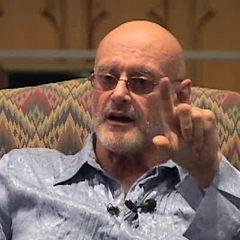
Ken Wilber is an American writer and philosopher, born on January 31, 1949. He is the founder of Integral Theory, which aims to integrate human knowledge, philosophy, psychology, and religion. Wilber's work covers a wide range of fields, including personal growth, spiritual development, and cultural studies. more

You May Also Like

“There are two kinds of aspiration in the realization of bodhicitta: the aspiration concerned for the welfare of all sentient beings and the aspiration to attain buddhahood for their sake. The spontaneous intention to attain buddhahood for the benefit of all sentient beings occurs when these two aspirations are complete. This is the realization of bodhicitta, the mind of enlightenment. At this point, the student has become a practitioner of the highest capacity and all activities and practices motivated by bodhicitta are those of the Greater Vehicle, the Mahayana.”

“The moment you have realized bodhicitta, you have become a Mahayana practitioner and are on the path to complete enlightenment but the moment your bodhicitta degenerates, you fall outside the fold of the bodhisattvas. Without bodhicitta, no matter how advanced you are in other practices—even if you have a direct realization of emptiness or have attained nirvana—nothing you do becomes the conduct of a bodhisattva or the cause of enlightenment.”

“Bodhisattvas are referred to as enlightened “heroes” or “warriors.” They are highly altruistic beings who have the wisdom to realize that by dedicating themselves to the welfare of other sentient beings, the fulfillment of their own self-interest comes automatically as a by-product.”

“The highest perfection of altruism, the ultimate altruism, is bodhicitta complemented by wisdom. Bodhicitta—the aspiration to bring about the welfare of all sentient beings and to attain buddhahood for their sake—is really the distilled essence, the squeezed juice, of all the Buddha’s teachings, because ultimately, the Buddha’s intention is to lead all sentient beings to perfect enlightenment, complete omniscience. Since it is bodhicitta that determines whether or not our practice becomes the path to enlightenment, bodhicitta is truly the heart essence of all the teachings of the Buddha.”

“With the wish to free all beings I shall always go for refuge To Buddha, Dharma and Sangha. Until I reach full enlightenment, Inspired by wisdom and compassion, Today, in the Buddha’s presence, I generate the mind of full awakening For the benefit of all sentient beings. As long as space remains As long as sentient beings remain Until then may I too remain And dispel the miseries of the world.”

“Having these negative imprints on my mental continuum is unbearable. “It’s as if I’ve swallowed a lethal poison. I must practice the antidote right away and purify all this negative karma immediately, without a second’s delay.” In this way, generate strong feelings of urgency and regret.”

“We are being developed by what we have done, and what we do, not only physically and verbally, but mentally also. What we now do in mind and speech and body will determine how we will become. The different forms and idiosyncrasies of all beings and things – all worlds in fact – depend on this inexorable causality of evolutionary action, or karma. Karma is not mysterious. Karma doesn‘t mean „fate“, although in a way it occupies the place of fate. Karma means „evolution, evolutionary causality.“ (Pages 79-80)”

“The literal meaning of guru yoga is ‘union with the teacher´s nature’. To blend your mind with the teacher’s mind is the most profound of all practices, and the shortest path of realization. It is the life force of the path and the one practice that includes all others. It was through relying on a spiritual teacher that all the bodhisattvas of the past generated the mind of enlightenment and reached perfection.”

“Those who practice the Dharma of the Mahayana in accordance with the Buddha's intention are known as bodhisattvas. If you practice the teachings of the Mahayana, you can reach the level of the great bodhisattvas Avalokiteshvara and Manjushri, in the best case, or become like the Buddha's two main disciples Shariputra and Maudgalyayana, who were gifted with insight and miraculous powers. Even if you are unable to practice to the full in this life, you will at least be reborn among the principal disciples of the future Buddha, Maitreya. The buddhas being those who have totally conquered the enemies of ignorance and the other emotions, they are often referred to by the synonym 'Victorious Ones,' while bodhisattvas, in many texts including the Tibetan original of the root verses of these teachings, are called 'children of the Victorious Ones'. Who, then, are the children of the buddhas? In the case of Buddha Shakyamuni, the child of his body was his physical son, Prince Rahula. The children of his speech were all those who heard him teach and attained the level of arhart - the great beings such as Shariputra, Maudgalayana, the sixteen arhats and others, who became the holders of his teachings. Above all, the children of the buddha's mind are the great bodhisattvas like Avalokiteshvara and Manjushri, who carry out their noble intention to bring all beings to enlightenment. For, just as a great monarch with a thousand children would choose the one with the most perfect qualities to be his heir, so, too, a buddha regards as his authentic heirs the bodhisattvas who have perfected the union of wisdom and compassion.”