“Books are written on Florence or Athens. Those cities have formed so many European minds that they must have a meaning. They have the means of moving to tears or of uplifting. They quiet a certain spiritual hunger whose bread is memory. But can one be moved by a city where nothing attracts the mind, where the very ugliness is anonymous, where the past is reduced to nothing? Emptiness, boredom, an indifferent sky, what are the charms of such places? Doubtless solitude and, perhaps, the human creature.”
Quote by Albert Camus
Work
The Myth of Sisyphus and Other Essays
This book is a compilation of essays that delve into the philosophical concepts of existentialism, focusing on the human experience and the meaning of life. It includes discussions on the nature of existence, the absurdity of life, and the role of individual freedom and responsibility. more
Author
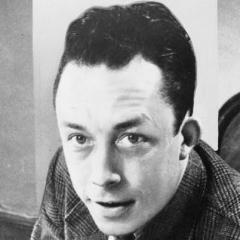
Albert Camus
Albert Camus was a French author and philosopher, born on November 7, 1913, and died on January 4, 1960. Known for his unique existentialist philosophy and profound insights into human suffering, Camus' works include 'The Stranger', 'The Plague', and 'The Myth of Sisyphus', which have had a profound impact on 20th-century literature. more
You May Also Like
“The patience of a true enthusiast is unlimited.”
Source: The Myth of Sisyphus and Other Essays
Source: The Myth of Sisyphus and Other Essays
Source: The Myth of Sisyphus and Other Essays
“Sometimes, we need to step away from technology to reconnect with yourself.”
“An hour a day, every so often, it forces you to pay attention to something that has no importance.”
Source: The Myth of Sisyphus and Other Essays
“Everything that is ephemeral wants to last.”
Source: The Myth of Sisyphus and Other Essays
Source: The Myth of Sisyphus and Other Essays
“Then there are incomparable nights under a rain of stars.”
Source: The Myth of Sisyphus and Other Essays
“So much solitude and nobility give these places an unforgettable aspect.”
Source: The Myths of Sisphus and Other Essays
Source: The Myth of Sisyphus and Other Essays