Quotessence
Home / Quotes / Quote by Neil Gaiman

Quote by Neil Gaiman

“And in our room, we made love like flames–opening, blending, burning. We made love like animals, like gods, like dreams. Was it worth waiting for? Gods, yes. It was worth worlds, that night, worth souls, worth eternity.”

Quote by Neil Gaiman

Work

The Sandman: Endless Nights

The Sandman: Endless Nights is a critically acclaimed graphic novel series written by Neil Gaiman. The series delves into the life and adventures of Dream, known as the Sandman, who is the personification of dreams and nightmares. The narrative weaves through various genres, including fantasy, horror, and literary fiction, creating a multifaceted and intricate story. The series is known for its deep themes, complex characters, and stunning artwork. more

Author
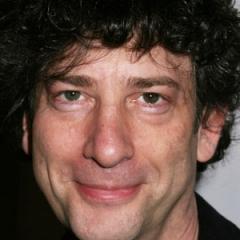
Neil Gaiman
Neil Gaiman

Neil Gaiman, born on November 10, 1960, is a renowned British author. His works span across various genres including fantasy, horror, and science fiction, with notable titles such as 'American Gods' and 'Good Omens'. Gaiman's writing style is distinctive and has won him a dedicated fan base. more

You May Also Like

“Just consider the next thought that pops up in your mind. Where did it come from? Did you freely choose to think it, and only then did you think it? Certainly not. The process of self-exploration begins with simple things, and becomes progressively harder. At first, we realise that we do not control the world outside us. I don’t decide when it rains. Then we realise that we do not control what’s happening inside our own body. I don’t control my blood pressure. Next, we understand that we don’t even govern our brain. I don’t tell the neurons when to fire. Ultimately we should realise that we do not control our desires, or even our reactions to these desires. Realising this can help us become less obsessive about our opinions, about our feelings, and about our desires. We don’t have free will, but we can be a bit more free from the tyranny of our will. Humans usually give so much importance to their desires that they try to control and shape the entire world according to these desires. In pursuit of their cravings, humans fly to the moon, wage world wars, and destabilise the entire ecosystem. If we understand that our desires are not the magical manifestations of free choice, but rather are the product of biochemical processes (influenced by cultural factors that are also beyond our control), we might be less preoccupied with them. It is better to understand ourselves, our minds and our desires rather than try to realise whatever fantasy pops up in our heads.”

“I always tried to keep him within my field of vision. I never let him drift away from me except when he wasn’t with me. And when he wasn’t with me, I didn’t much care what he did so long as he remained the exact same person with others as he was with me. Don’t let him be someone else when he’s away. Don’t let him be someone I’ve never seen before. Don’t let him have a life other than the life I know he has with us, with me.”

“I remembered the scene in the Bible when Jacob asks Rachel for water and on hearing her speak the words that were prophesied for him, throws up his hands to heaven and kisses the ground by the well. Me Jewish, Celan Jewish, Oliver Jewish—we were in a half ghetto, half oasis, in an otherwise cruel and unflinching world where fuddling around strangers suddenly stops, where we misread no one and no one misjudges us, where one person simply knows the other and knows him so thoroughly that to be taken away from such intimacy is galut, the Hebrew word for exile and dispersal. Was he my home, then, my homecoming? You are my homecoming. When I’m with you and we’re well together, there is nothing more I want. You make me like who I am, who I become when you’re with me, Oliver. If there is any truth in the world, it lies when I’m with you, and if I find the courage to speak my truth to you one day, remind me to light a candle in thanksgiving at every altar in Rome.”