Quotessence
Home / Quotes / Quote by Craig Childs

Quote by Craig Childs

Work

The Animal Dialogues: Uncommon Encounters in the Wild

Browse quotes and source details for this work. more

Author
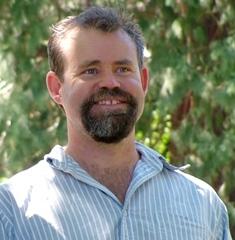
Craig Childs
Craig Childs

Limited information is available about Craig Childs, who was born on April 21, 1967. He is an individual with an unknown profession. more

You May Also Like

“The foundational Vajrakilaya is the sun shining in the sky behind the clouds. The path Vajrakilaya is the removal of the clouds from the sky through the force of wind and rain, or whatever; it is the path of method and wisdom, combined. And the resultant Vajrakilaya is the nature of your mind, the nature of your rigpa, which is the same mind as the mind of the primordial buddha, Kuntuzangpo. The path Vajrakilaya is the removal of the adventitious veil of obscuration that covers rigpa. Applying the method by practicing generation stage (kyerim) and completion stage (dzogrim), accumulating merit and purifying negative karma, removing that veil, is the path. The result is realizing that ones own self nature is buddha. So the result is the same as the foundation. In the beginning you are buddha, and in the end you are buddha.”

“The Platonists and their Christian successors held the peculiar notion that Earth was tainted and somehow nasty, while the heavens were perfect and divine. The fundamental idea that the Earth is a planet, that we are citizens of the Universe, was rejected and forgotten. This idea was first argued by Aristarchus, born on Samos three centuries after Pythagoras. Aristarchus was one of the last of the Ionian scientists. By this time, the center of intellectual enlightenment had moved to the great Library of Alexandria. Aristarchus was the first person to hold that the Sun rather than the Earth is at the center of the planetary system that all the planets go around the Sun rather than the Earth. Typically, his writings on this matter are the lost. From the size of the Earth's shadow on the Moon during a lunar eclipse, he deduced that the Sun had to be much larger than the Earth, as well as very far away. He may then have reasoned that it is absurd for so large a body as the Sun to revolve around so small a body as the Earth. He put the Sun at the center, made the Earth rotate on its axis once a day or orbit the Sun once a year. It is the same idea we associate with the name of Copernicus, whom Galileo described as the 'restorer and confirmer', not the inventor, of the heliocentric hypothesis. For most of the 1,800 years between Aristarchus and Copernicus nobody knew the correct disposition of the planets, even though it had been laid out perfectly clearly around 280 B.C.”