Quotessence
Home / Quotes / Quote by Louise Glück

Quote by Louise Glück

Work

The House on Marshland

Browse quotes and source details for this work. more

Author
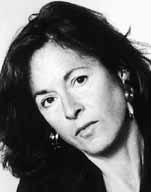
Louise Glück
Louise Glück

Louise Glück (born April 22, 1943) is an American poet and essayist, awarded the Nobel Prize in Literature in 2020. Born in New York City to Hungarian Jewish immigrants, she developed a passion for poetry early in life. She studied at Sarah Lawrence College and Columbia University. Glück's poetry is known for its precise, austere language and deep psychological insight, often exploring themes of family, love, death, and nature. Her major works include 'The Wild Iris' (1992), 'The Seven Ages' (2001), and 'Faithful and Virtuous Night' (2014). She has received numerous honors, including the Pulitzer Prize for Poetry and the National Book Award, and served as U.S. Poet Laureate from 2003 to 2004. Her works have been translated into many languages and have had a profound impact on contemporary poetry. more

You May Also Like

“Fame is not so impossible for people with charisma, passion and talent. Being famous just means you have fans, and even one or two is enough to make you someone special. Ask a music fan who the best guitarist of all time is, and while one group insists that it was Jimmi Hendrix, another group swears that it was Eddie Van Halen instead. There will never be a time when everyone on this planet agrees on something like that, but luckily that's not important. All that matters is that both sides remain loyal, which they will assuming you continue to be who you are and do your thing. This is all that you need to be immortalized.”

“Yes, I’m sure the universe connected us and may do so again when it deems the time is right. Until then, in only a few short hours combined with a set of lovely messages, I have enjoyed something rarely found, a gemstone in the sands of time.”

“Ever since I arrived to a state of manhood, I have felt a sincere passion for liberty. The history of nations doomed to perpetual slavery, in consequence of yielding up to tyrants their natural born liberties, I read with a sort of philosophical horror; so that the first systematical and bloody attempt at Lexington, to enslave America, thoroughly electrified my mind, and fully determined me to take part with my country.”

“Great teachers had great personalities and that the greatest teachers had outrageous personalities. I did not like decorum or rectitude in a classroom; I preferred a highly oxygenated atmosphere, a climate of intemperance, rhetoric, and feverish melodrama. And I wanted my teachers to make me smart. A great teacher is my adversary, my conqueror, commissioned to chastise me. He leaves me tame and grateful for the new language he has purloined from other kings whose granaries are filled and whose libraries are famous. He tells me that teaching is the art of theft: of knowing what to steal and from whom. Bad teachers do not touch me; the great ones never leave me. They ride with me during all my days, and I pass on to others what they have imparted to me. I exchange their handy gifts with strangers on trains, and I pretend the gifts are mine. I steal from the great teachers. And the truly wonderful thing about them is they would applaud my theft, laugh at the thought of it, realizing they had taught me their larcenous skills well.”