Quotessence
Home / Quotes / Quote by Jeanette Winterson

Quote by Jeanette Winterson

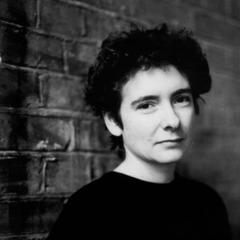
“When I was born, my mother dressed me as a boy because she could not afford to feed any more daughters. By the mystic laws of gender and economics, it ruins a peasant to place half a bowl of figs in front of his daughter, while his son may gorge on the whole tree, burn it for firewood and piss on the stump, and still be reckoned a blessing to his father.”

Quote by Jeanette Winterson

Work

The Powerbook

The book delves into the consequences of advanced technology, examining how it shapes human interactions and societal structures. more

Author

Jeanette Winterson
Jeanette Winterson

Jeanette Winterson is a renowned British author known for her distinctive literary style and profound social commentary. Her works span a wide range of themes, including novels, essays, and poetry. Winterson's novel 'Oranges Are Not the Only Fruit' is a story about growth, faith, and sexuality that has received widespread acclaim. more

You May Also Like

“You can deny him, he thought, watching his father across the table. You can hate him, love him, pity him, never speak to or look at him in the eye again, never deign even to be in his crabbed and bitter presence, but you're still stuck with the son of a bitch. One way or another he'll always be your daddy, not even all-powerful death was going to change that.”

“If there’s one thing I regret it’s not having told my father how much I admired and loved him. My only gesture of affection was a quick kiss on the forehead two days before he died. The kiss tasted like sugar and I felt like a thief who furtively stole something that no longer belong to anybody. Why do we hide our feelings? Out of cowardice? Out of egotism? With a mother it’s different: we cover her with flowers, gifts and sweet phrases. What is it that prevents us from affectionately confronting our father and telling him, face to face, how much we love or admire him? On the other hand, why do we curse him under our breath when he puts us in our place? Why do we react with wickedness and not affection when the occasion presents itself? Why are we brave with taunts and cowards with affection? Why did I never tell my father these things but I tell them to you, who are probably too young to understand them yet? One night I wanted to speak to my father ion his room but found him asleep. As I quietly began to leave the room, I heard my sleeping father, in a desperate voice, say: “No, papa, no!” What strange, agitated dream was my father experiencing with his father? And if one thing caught my attention, beyond the enigma of the dream, was that my father was seventy-eight years old at that time and my grandfather had been dead for at least a quarter of a century. Does a man have to die to speak to his father?”

“Now he must get back to Margaret. In the old days, he used to come home full of tales about deliveries, excited, even exalted by having witnessed the same old miracle. But after they lost both their sons in the war, she couldn't stand to hear about any of that and he kept it to himself. She had become a shadow, acquiescent, passive, full of humdrum little remarks about the house and the weather and how hard he was on his clothes, and then he'd bought her a puppy, and she talked endlessly about that. It had become a fat spoiled dog, and still she talked about it as though it were a puppy. It was all he could think to do for her, as his grief had never been allowed to be on par with hers. He kept that to himself as well. But when he was alone in the car like this, and with a drop of whisky inside him, he thought about Ian and Donald who were never spoken of at home, who would, he felt, be entirely forgotten except for his own memory and their names on the village monument.”