“A man's imperative command is not only to say "no" in cases where "yes" would be a sign of "disinterestedness," but also to say "no" as seldom as possible. One must part with all that which compels one to repeat "no," with ever greater frequency. The rationale of this principle is that all discharges of defensive forces, however slight they may be, involve enormous and absolutely superfluous losses when they become regular and habitual. Our greatest expenditure of strength is made up of those small and most frequent discharges of it. The act of keeping things off, of holding them at a distance, amounts to a discharge of strength,—do not deceive yourselves on this point!—and an expenditure of energy directed at purely negative ends. Simply by being compelled to keep constantly on his guard, a man may grow so weak as to be unable any longer to defend himself.”
Quote by Friedrich Nietzsche
Book:Ecce Homo
Work
Author
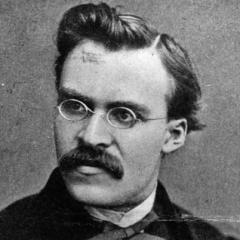
Friedrich Nietzsche
Friedrich Nietzsche was a German philosopher, cultural critic, poet, and writer whose works have had a profound impact on subsequent philosophy, literature, and thought. His ideas revolve around concepts such as the 'will to power', the 'Übermensch', and the 'eternal recurrence'. more
You May Also Like
Source: Dreams of Falling
Source: Dreams of Falling