Quotessence
Home / Quotes / Quote by Jared Taylor

Quote by Jared Taylor

“E. Raymond Hall, professor of biology at the University of Kansas, wrote the authoritative work on American wildlife, Mammals of North America. He stated as a biological law that, “two subspecies of the same species do not occur in the same geographic area.” Prof. Hall explains that human races are biological subspecies, and that the law applied to them, too: “To imagine one subspecies of man living together on equal terms for long with another subspecies is but wishful thinking and leads only to disaster and oblivion for one or the other.” In recent decades we have seen what Prof. Hall was writing about in the Balkans, Sudan, Rwanda, Burundi, and the Eastern Congo. We call it “ethnic cleansing.” In Zimbabwe there is a systematic effort to rid the country of whites, and some observers do not rule out similar efforts in South Africa and Namibia. Is it utterly unrealistic to imagine ethnic cleansing in the United States? Prof. Hall’s forebodings do not appear outlandish in some of our schools, prisons, and neighborhoods. The demographic forces we have set in motion have created conditions that are inherently unstable and potentially violent. All other groups are growing in numbers and have a vivid racial identity. Only whites have no racial identity, are constantly on the defensive, and constantly in retreat. They have a choice: regain a sense of identity and the resolve to maintain their numbers, their traditions, and their way of life—or face oblivion.”

Quote by Jared Taylor

Work

White Identity: Racial Consciousness in the 21st Century

Browse quotes and source details for this work. more

Author
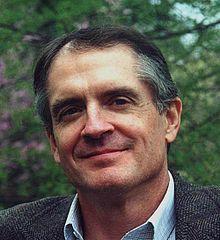
Jared Taylor
Jared Taylor

Jared Taylor, born on September 15, 1951, is an American journalist known for his views on racism and immigration issues. He was the editor of 'American Renaissance' magazine and has contributed articles to various publications, including 'The American Conservative' and 'The New American'. more

You May Also Like

“The modern world is the opposite of the aspiration expressed in Doctor Martin Luther King's 'I Have A Dream' speech. In that speech, Doctor King stated his ideal vision of a future where his children would be judged not 'by the color of their skin but by the content of their character.' There is an even-greater obsession with race today and the external packaging we come in. Content of character is secondary, if not completely irrelevant.”

“I believe in the radical equality of all human beings. No human is of greater or lesser value than anyone else. The word “radical” has in its beginnings the word “root,” meaning what is foundational. I believe the commitment to radical equality is the root, or foundation, of inclusive meeting practices and fair facilitation.”

“Even if there is no connection between diversity and international influence, some people would argue that immigration brings cultural enrichment. This may seem to be an attractive argument, but the culture of Americans remains almost completely untouched by millions of Hispanic and Asian immigrants. They may have heard of Cinco de Mayo or Chinese New Year, but unless they have lived abroad or have studied foreign affairs, the white inhabitants of Los Angeles are likely to have only the most superficial knowledge of Mexico or China despite the presence of many foreigners. Nor is it immigrants who introduce us to Cervantes, Puccini, Alexander Dumas, or Octavio Paz. Real high culture crosses borders by itself, not in the back pockets of tomato pickers, refugees, or even the most accomplished immigrants. What has Yo-Yo Ma taught Americans about China? What have we learned from Seiji Ozawa or Ichiro about Japan? Immigration and the transmission of culture are hardly the same thing. Nearly every good-sized American city has an opera company, but that does not require Italian immigrants. Miami is now nearly 70 percent Hispanic, but what, in the way of authentic culture enrichment, has this brought the city? Are the art galleries, concerts, museums, and literature of Los Angeles improved by diversity? Has the culture of Detroit benefited from a majority-black population? If immigration and diversity bring cultural enrichment, why do whites move out of those very parts of the country that are being “enriched”? It is true that Latin American immigration has inspired more American school children to study Spanish, but fewer now study French, German, or Latin. If anything, Hispanic immigration reduces what little linguistic diversity is to be found among native-born Americans. [...] [M]any people study Spanish, not because they love Hispanic culture or Spanish literature but for fear they may not be able to work in America unless they speak the language of Mexico. Another argument in favor of diversity is that it is good for people—especially young people —to come into contact with people unlike themselves because they will come to understand and appreciate each other. Stereotyped and uncomplimentary views about other races or cultures are supposed to crumble upon contact. This, of course, is just another version of the “contact theory” that was supposed to justify school integration. Do ex-cons and the graduates—and numerous dropouts—of Los Angeles high schools come away with a deep appreciation of people of other races? More than half a century ago, George Orwell noted that: 'During the war of 1914-18 the English working class were in contact with foreigners to an extent that is rarely possible. The sole result was that they brought back a hatred of all Europeans, except the Germans, whose courage they admired.”

“Many kinds of animal behavior can be explained by genetic similarity theory. Animals have a preference for close kin, and study after study has shown that they have a remarkable ability to tell kin from strangers. Frogs lay eggs in bunches, but they can be separated and left to hatch individually. When tadpoles are then put into a tank, brothers and sisters somehow recognize each other and cluster together rather than mix with tadpoles from different mothers. Female Belding’s ground squirrels may mate with more than one male before they give birth, so a litter can be a mix of full siblings and half siblings. Like tadpoles, they can tell each other apart. Full siblings cooperate more with each other than with half-siblings, fight less, and are less likely to run each other out of the territory when they grow up. Even bees know who their relatives are. In one experiment, bees were bred for 14 different degrees of relatedness—sisters, cousins, second cousins, etc.—to bees in a particular hive. When the bees were then released near the hive, guard bees had to decide which ones to let in. They distinguished between degrees of kinship with almost perfect accuracy, letting in the closest relatives and chasing away more distant kin. The correlation between relatedness and likelihood of being admitted was a remarkable 0.93. Ants are famous for cooperation and willingness to sacrifice for the colony. This is due to a quirk in ant reproduction that means worker ants are 70 percent genetically identical to each other. But even among ants, there can be greater or less genetic diversity, and the most closely related groups of ants appear to cooperate best. Linepithema humile is a tiny ant that originated in Argentina but migrated to the United States. Many ants died during the trip, and the species lost much of its genetic diversity. This made the northern branch of Linepithema humile more cooperative than the one left in Argentina, where different colonies quarrel and compete with each other. This new level of cooperation has helped the invaders link nests into supercolonies and overwhelm local species of ants. American entomologists want to protect American ants by introducing genetic diversity so as to make the newcomers more quarrelsome. Even plants cooperate with close kin and compete with strangers. Normally, when two plants are put in the same pot, they grow bigger root systems, trying to crowd each other out and get the most nutrients. A wild flower called the Sea Rocket, which grows on beaches, does not do that if the two plants come from the same “mother” plant. They recognize each others’ root secretions and avoid wasteful competition.”