Quotessence
Home / Quotes / Quote by John Steinbeck

Quote by John Steinbeck

“Cathy's lies were never innocent. Their purpose was to escape punishment, or work, or responsibility, and they were used for profit. Most liars are tripped up either because they forget what they have told or because the lie is suddenly faced with an incontrovertible truth. But Cathy did not forget her lies, and she developed the most effective method of lying. She stayed close enough to the truth so that one could never be sure. She knew two other methods also -- either to interlard her lies with truth or to tell a truth as though it were a lie. If one is accused of a lie and it turns out to be the truth, there is a backlog that will last a long time and protect a number of untruths.”

Quote by John Steinbeck

Work

East of Eden

John Steinbeck's 'East of Eden' is a profound and complex narrative that delves into the lives of the Joad family as they navigate the challenges of their time. The story is rich with symbolism and philosophical musings, offering a rich tapestry of human emotions and societal struggles. more

Author

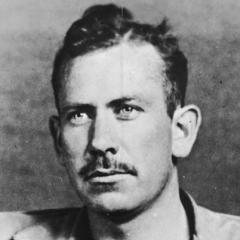
John Steinbeck
John Steinbeck

John Steinbeck was an American author renowned for his profound depiction of American society and the lives of farmers. His works often explore themes of poverty, social injustice, and human nature. Steinbeck was awarded the Nobel Prize in Literature in 1962 for his significant contribution to American literature. more

You May Also Like

“If we could believe that he [Jesus] really countenanced the follies, the falsehoods, and the charlatanism which his biographers [Gospels] father on him, and admit the misconstructions, interpolations, and theorizations of the fathers of the early, and the fanatics of the latter ages, the conclusion would be irresistible by every sound mind that he was an impostor... We find in the writings of his biographers matter of two distinct descriptions. First, a groundwork of vulgar ignorance, of things impossible, of superstitions, fanaticisms and fabrications... That sect [Jews] had presented for the object of their worship, a being of terrific character, cruel, vindictive, capricious and unjust... Jesus had to walk on the perilous confines of reason and religion: and a step to right or left might place him within the gripe of the priests of the superstition, a blood thirsty race, as cruel and remorseless as the being whom they represented as the family God of Abraham, of Isaac and of Jacob, and the local God of Israel. They were constantly laying snares, too, to entangle him in the web of the law... That Jesus did not mean to impose himself on mankind as the son of God, physically speaking, I have been convinced by the writings of men more learned than myself in that lore. [Letter to William Short, 4 August, 1820]”

“…the painting was now all finished, she would leave the masking tape on till it dried. It was satisfying to do this. A job with a beginning, middle and end, and people to have dinner with. Don’t think about it, keep busy. Got no money anyway.”

“I've always resented the smug statements of politicians, media commentators, corporate executives who talked of how, in America, if you worked hard you would become rich. The meaning of that was if you were poor it was because you hadn't worked hard enough. I knew this was a lie, about my father and millions of others, men and women who worked harder than anyone, harder than financiers and politicians, harder than anybody if you accept that when you work at an unpleasant job that makes it very hard work indeed.”