Quotessence
Home / Quotes / Quote by Victor Hugo

Quote by Victor Hugo

“It will come, citizens, the day when all shall be concord, harmony, light, joy and life; it will come, and it is so that it may come that we are going to die.”

Quote by Victor Hugo

Author
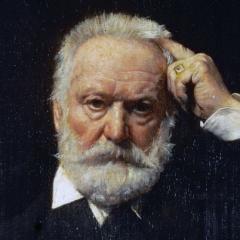
Victor Hugo
Victor Hugo

Victor Hugo, a French romantic poet, novelist, and playwright, was born on February 26, 1802, and died on May 22, 1885. He is considered one of the greatest writers in French literary history, known for his profound humanistic concerns and rich imagination. more

You May Also Like

“...feminism has to be absolutely utopian and unrealistic, far removed form any semblance of the world we're living in now. We have to hope for and envision something before agitating for it, rather than blithely giving up, and accepting the way things are. After all, utopian ideals are as ideological as the political foundations of the world we're currently living in. Above everything, feminism is a constant work in progress. We are all still learning.”

“As for us, we saw the police as a natural catastrophe— like floods, fires, earthquakes. There was nothing you could do about these things except to try and escape them. We had no analysis, no understanding that society could be changed. We simply tried to survive, as ourselves, as kamp girls, natural rebels. We did not feel that the police might not be entitled to hunt us, but accepted them as inevitable. I was beaten up for suggesting that a woman ask for a lawyer. It was seem as a stupid— even dangerous— suggestion. Fighting back with threats of lawyers would only make the police even angrier at us. But part of me felt that what was happening was unfair and unjust, though I had no idea how things could ever be different. Melbourne and Adelaide were exactly the same. The public lesbian scene was dangerous and difficult. There were many other New Zealand lesbians around, too. In spite of everything, I loved it. The “mateship” was amazing and close, important enough for any risk. And the freedom to be ourselves, to be real, to be queer, affirmed us. There were private, closeted scenes too, but they were hard to find and cliquey. They were fearful of being “sprung” by kamps who were too obvious. They were mainly older middle-class women. I knew some of them, learnt many things from them— like how to behave in a nice restaurant if you are taken to dinner. But they too had no sense of anything being able to change— except for the one strange woman who danced naked to Beethoven and lent me de Beauvoir’s The Second Sex. She sowed some wild ideas, more than a decade too early for them to make any sense.”

“No, this wasn’t a 1960s student riot. Out there were the streets. There were no nice dorms for sleeping. No school cafeteria for certain food. No affluent parents to send us checks. There was a ghetto riot on home turf. We already had our war wounds. So this was just another battle. Nobody thought of it as history, herstory, my-story, your-story, or our-story. We were being denied a place to dance together. That’s all. The total charisma of a revolution in our CONSCIOUSNESS rising from the gutter to the gut to the heart and the mind was here. Non-existence (or part existence) was coming into being, and being into becoming. Our Mother Stonewall was giving birth to a new era and we were the midwives.”