“Review the multiplicity of language-games in the following examples, and in others: Giving orders, and obeying them— Describing the appearance of an object, or giving its measurements— Constructing an object from a description (a drawing)— Reporting an event— Speculating about an event— Forming or teasing a hypothesis— Presenting the results of an experiment in tables and diagrams— Making up a story; and reading it— Singing catches— Guessing riddles— Making riddles— Making a joke; telling it— Solving a problem in practical arithmetic— Translating from one language into another— Asking, thanking, cursing, greeting, praying. —It is interesting to compare the multiplicity of the tools in language and of the ways they are used, the multiplicity of kinds of word and sentence, with what logicians have said about the structure of language. (Including the author of the Tractatus Logico-Philosophicus.)”
Quote by Ludwig Wittgenstein
Work
Ludwig Wittgenstein's Philosophical Investigations is a profound and influential text that delves into the complexities of human thought and understanding. The book is structured as a series of dialogues and reflections, examining concepts such as meaning, truth, and the nature of philosophical problems. Wittgenstein challenges traditional philosophical assumptions and proposes a new approach to understanding language and its role in shaping our perceptions of the world. more
Author
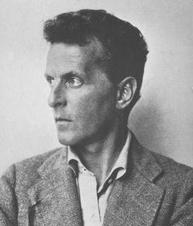
Ludwig Wittgenstein was one of the most important philosophers of the 20th century, renowned for his profound contributions to language, logic, and philosophical methods. His ideas have had a significant impact on the development of analytic philosophy and philosophy of language. more
You May Also Like
“Don’t let your heart get in the way of your head.”
“The way most people use their minds is analogous to an ambulance that is used only as an umbrella.”