Quotessence
Home / Quotes / Quote by Carson McCullers

Quote by Carson McCullers

Work

The Heart Is a Lonely Hunter

This novel delves into the lives of diverse individuals living in a small town in Georgia, highlighting the loneliness and the search for connection among its inhabitants. The narrative weaves through the lives of these characters, showcasing their struggles and the complexities of human relationships. more

Author
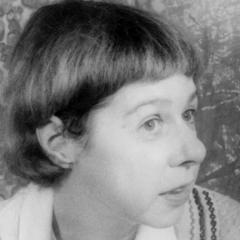
Carson McCullers
Carson McCullers

Carson McCullers was an American author known for her unique literary style and profound insights into human nature. Her works, often set in the American South, explored themes such as loneliness, love, and identity. more

You May Also Like

“You really want to know?” Beatrice nodded. Catherine simply waited. If he wanted to tell them, he would. Clarence was not the sort of man you could persuade or plead with. “All right. It was the year I graduated from law school. Like the other black men in my class, I was inspired by Judge Ruffin, the first black man to graduate from Harvard Law and the first to become a judge in Massachusetts. I thought I was going to be just like him. Me, a poor boy raised by a widowed mother who used to clean other people’s houses to pay the rent. Well, I went through Howard on scholarship, then Harvard on scholarship, and my first year out I worked for an organization offering legal aid to other poor folk—black, Irish, Italian, all sorts. I was sent to one of the counties in the western part of the state, to defend a black man accused of raping a white woman. That was the first time a judge called me ‘boy.’ I got my client off all right—the woman herself stood in the witness stand to say it wasn’t rape. They wanted to get married. That was legal in Massachusetts, and she was of age, but her father didn’t want her to marry a black man, so he told the sheriff that my client had raped her. She was visibly pregnant. “My client walked out of that courthouse a free man, but there was a crowd waiting for him outside, and suddenly her brother stepped out of that crowd. He was the sheriff’s deputy. He had a gun, and he said he was going to shoot that damn . . . his language isn’t fit to repeat. He was determined to kill my client. Without thinking, I jumped on him and wrestled with him for the gun. It went off. . . . He bled to death in my arms. So I was tried for manslaughter in that courthouse, in front of that judge. Despite his jury instructions, I was acquitted—you could almost see him frothing at the mouth with fury and tearing his hair out, the day I walked out of that courtroom, a free man. Everyone in that crowd had seen it was an accident, but who was going to give me a job after that? It didn’t matter that I was innocent. My face had been on the cover of the Boston Globe as the black man who’d killed a white policeman.”

“March 15, 1998 Let me forget when the hanged man looks in the window. Outside, the desperate speak in a lost language. Let us in, they sigh, with the tongues of waterfalls. But you, out of breath, category of the misplaced; serial-killer of my days; while my left ventricle pumps the exact pressure of the universe . . . in spite of your default, with no substantial reason, I speak for you as though you are still here. We are arranged like that. A sad mistake, a Mendelbrot, a fractal glitch, a gift from zero.”