“It is due, however, to my mistress to say of her, that she did not adopt this course of treatment immediately. She at first lacked the depravity indispensable to shutting me up in mental darkness. It was at least necessary for her to have some training in the exercise of irresponsible power, to make her equal to the task of treating me as though I were a brute. My mistress was, as I have said, a kind and tender-hearted woman; and in the simplicity of her soul she commenced, when I first went to live with her, to treat me as she supposed one human being ought to treat another. In entering upon the duties of a slaveholder, she did not seem to perceive that I sustained to her the relation of a mere chattel, and that for her to treat me as a human being was not only wrong, but dangerously so. Slavery proved as injurious to her as it did to me. When I went there, she was a pious, warm, and tender-hearted woman. There was no sorrow or suffering for which she had not a tear. She had bread for the hungry, clothes for the naked, and comfort for every mourner that came within her reach. Slavery soon proved its ability to divest her of these heavenly qualities. Under its influence, the tender heart became stone, and the lamblike disposition gave way to one of tiger-like fierceness.”
Quote by Frederick Douglass
Work
This seminal work provides a first-hand account of the hardships and triumphs of Frederick Douglass, a former slave who rose to prominence in the fight against slavery. The narrative covers his early years in bondage, his escape to freedom, and his subsequent journey to becoming a leading figure in the abolitionist movement. more
Author
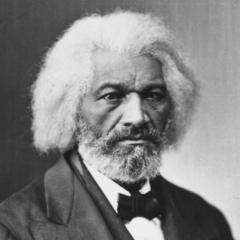
Frederick Douglass was a renowned orator and writer, born into a slave family in Maryland, USA. He gained his freedom in the mid-19th century through self-education and became one of the leaders of the abolitionist movement. Douglass made significant contributions to the cause of equality and justice in the United States through his incisive speeches and writings, which exposed the cruelty of slavery and inspired countless people to join the abolitionist movement. more
You May Also Like
“Deep inside every slave there is a repressed, dormant master”