Quotessence
Home / Quotes / Quote by Jane Austen

Quote by Jane Austen

“You are in a melancholy humour, and fancy that any one unlike yourself must be happy. But remember that the pain of parting from friends will be felt by every body at times, whatever be their education or state. Know your own happiness. You want nothing but patience — or give it a more fascinating name, call it hope.”

Quote by Jane Austen

Work

Sense and Sensibility

This timeless novel follows the lives of two sisters, Elinor and Marianne Dashwood, as they navigate the complexities of romance and social status amidst the backdrop of their family's decline. The story delves into the emotional and moral dilemmas faced by the characters, offering a poignant commentary on the era's values and norms. more

Author
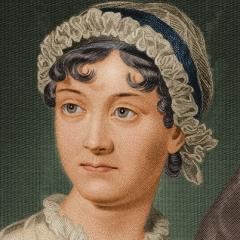
Jane Austen
Jane Austen

Jane Austen, born on December 16, 1775, and died on July 18, 1817, was a renowned English novelist of the 19th century. Known for her exquisite psychological portrayals and satirical humor, Austen's works mainly revolve around rural life in England, depicting the customs and interpersonal relationships of the time. Her representative works include 'Pride and Prejudice' and 'Sense and Sensibility'. more

You May Also Like

“As I look back over the other best friendships I've had that also ended, I wonder if, in addition to simply having a finite amount of time for such intimacy, we also have certain periods in our lives in which we seek out people who seem to embody the things we lack. Then, when we gain those things for ourselves, we no longer need that friend in the same way, which causes a serious dissonance in the relationship. Perhaps this is why these particular friendships burn so bright and then disappear so completely.”

“It occurs to me that she is not unique--that all women compare lives. We are aware of whose husband works more, who helps more around the house, who makes more money, who is having more sex. We compare our children, taking note of who is sleeping through the night, eating their vegetables, minding their manners, getting into the right schools. We know who keeps the best house, throws the best parties, cooks the best meals, has the best tennis game. We know who among us is the smartest, has the fewest lines around her eyes, has the best figure--whether naturally or artificially. We are aware of who works full-time, who stays at home with the kids, who manages to do it all and make it look easy, who shops and lunches while the nanny does it all. We digest it all and then discuss with our friends. Comparing and then confiding; it is what women do. The difference, I think, lies in why we do it. Are we doing it to gauge our own life and reassure ourselves that we fall within the realm of normal? Or are we being competitive, relishing others' shortcomings so that we can win, if only by default?”

“There was just Mavis and me, but it never seemed lonely because we never stopped talking. I could have an argument, in earnest, about who was the best “Kid” in the Hall, without having to explain who they were. One friend with whom you have a lot in common is better than three with whom you struggle to find things to talk about. We never needed best friend gear because I guess with real friends you don’t have to make it official. It just is.”