Quotessence
Home / Quotes / Quote by Dorothy L. Sayers

Quote by Dorothy L. Sayers

Work

Whose Body?

This book is a classic in the detective fiction genre, known for its intricate plot and clever sleuthing. The story unfolds in a secluded country house where a mysterious death occurs, leading to a series of investigations and twists. more
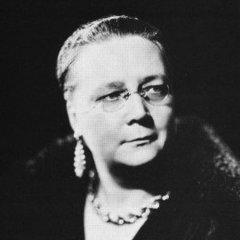
Author

Dorothy L. Sayers
Dorothy L. Sayers

Dorothy L. Sayers was an English writer renowned for her detective novels. Her works are celebrated for their unique literary style and profound insights into criminal psychology. Sayers' detective novels typically feature the character of Valery West, a female detective, whose stories offer not only suspenseful plots but also delve into moral and philosophical issues. more

You May Also Like

“The estate on which my Uncle Sandy had been a tenant was one of those on which the relations of landlord and tenant were spoken of as being on a paternal footing; the idea of its being a commercial relationship was strongly resented and declared to be the suggestion of radicalism of a very red type, only fitted, if not designed, to excite prejudice against the landlord class, whose distinctive benevolence forbad their ever going farther than to take what they wanted, and proclaim the grand old doctrine of 'LIVE and let live.”

“For years the Church of Scotland, the Established Church, had been tearing itself apart. Two key issues dominated: patronage - the right of landowners to appoint and even force ministers on an unwilling congregation - and the interference of the state in church affairs. On one side were the Moderates, supporters of patronage, friends of the lairds, and, according to an earlier General Assembly report, often 'inattentive to the interests of religion'... The rival faction, the Evangelicals, opposed patronage, wanted complete church independence, and insisted on a far stricter interpretation of religious doctrine. So entrenched were the divisions that it brought the Disruption of 1843 - perhaps 'the most momentous single event of the nineteenth century' - with 470 ministers out of 1,200, plus their elders, congregations and 400 schoolteachers breaking away to create the Free Church.”

“Her back pressed against his chest, slick with sweat and tremblin’ with exhaustion, but still unyieldin’. “Damn ye,” Alyssa gasped between clenched teeth, her voice sharp as the ache twistin’ through her belly. “If I dinnae hate ye by the time this is done, I’ll eat my plaid.” Tryss’s breath hitched in a laugh. “Well, that’s nae very nice. Why say such things tae me when I love ye so?”

“Some newspaper stories can be presented in entertaining ways; they can make you laugh; they can make you weep. But they are not charged with providing exaltation or fantasy. In the most entertained nation in the history of the world, newspapers exist to provide the citizenry with truth. Sometimes the truth can have a moral point. Sometimes the truth is painful. Sometimes the truth is banal. But it has to be true. It must have a granitelike foundation in fact. The mere stacking of facts is not, of course, enough. The facts must be organized into a coherent whole. They must tell a story. And the great story usually tells us something larger than the mere facts, something about what novelists and philosophers have called, perhaps too grandly, the human condition.”