Quotessence
Home / Quotes / Quote by Arthur Wallis

Quote by Arthur Wallis

“Though our main emphasis is intercession, a word may not be out of place here on the use of tongues in praise and thanksgiving. ‘If you bless with the Spirit . . . you may give thanks well enough’ (verses 16, 17). Paul’s restricting of the gift here is because of the presence of ‘the other man’ Who is not helped by an utterance he does not understand. In the solitude of one’s own devotions these restrictions no longer apply. Only God is present, and ‘one Who speaks in tongues speaks not to men but to God’ (verse 2). But is it not better to do it in your mother tongue and understand What you are saying? Not necessarily, or God would never have given this gift, nor would Paul have used it so much. Have we not known times when, in adoration of the Lord, we feel the inadequacy of our own language to express all that we feel in our hearts? The very language which is usually an indispensable channel of communication seems to become a barrier to communication. It is then that this gift comes to our aid, and the human spirit is released in an utterance of praise or thanksgiving that would not have been possible in our native tongue.”

Quote by Arthur Wallis

Work

Pray in the Spirit

Browse quotes and source details for this work. more

Author
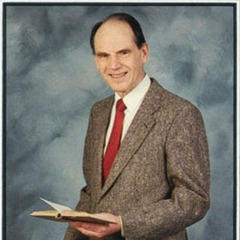
Arthur Wallis
Arthur Wallis

Arthur Wallis, born in 1922 in the United Kingdom, was a renowned author. His works covered a range of genres including history, biography, and fiction, and were well-received by readers. more

You May Also Like

“Far too much modern Christian prayer has insisted on words, on logic, on getting everything clear and out into the open. This is of course important and indeed vital--as one aspect of the whole. But prayer, if it is to be Christian prayer, cannot be a grasping at control. It is precisely a relinquishing of control--to the one who is capable of doing far, far more than we can ask or imagine. It is saying 'Thy will be done.' It is therefore appropriate that, at some times and in some ways, that prayer should pass beyond the merely rational and wordy and engage with God, as Paul says in Romans 8, at a level too deep for words.”

“At Seabury House, headquarters of the Episcopal church, David was asked the touchiest question of all--the one that in the past had led to more ill-will toward the Pentecostals than any other. He'd been talking to a group of clergymen for thirty minutes or so about the Pentecostal experience when one of the priests stood up suddenly and said with some asperity, "Mr. du Plessis, are you telling us that you Pentecostals have the truth, and we other churches do not?" David admits he prayed fast. "No," he said. "That is not what I mean." He cast about for a way to express the difference Pentecostals feel exists between their church and others--a feeling so often misunderstood--and suddenly he found himself thinking about an appliance he and his wife had bought when they moved to their Dallas home. "We both have the truth," he said. "You know, when my wife and I moved to America, we bought a marvelous device called a Deepfreeze, and there we keep some rather fine Texas beef. "Now, my wife can take one of those steaks out and lay it, frozen solid, on the table. It's steak all right, no question of that. You and I can sit around and analyze it: we can discuss its lineage, its age, what part of the steer it comes from. We can weigh it and list its nutritive values. "But if my wife puts that steak on the fire, something different begins to happen. My little boy smells it from way out in the yard and comes shouting: 'Gee, Mom, that smells good! I want some!' "Gentlemen," said David, "that is the difference between our ways of handling the same truth. You have yours on ice; we have ours on fire.”

“With no change in the tone of her voice, Lydia began to pray in tongues. And at that instant I felt--actually felt--a wave of warmth pass from her hands into my head and then swiftly down through my chest and arms. The sensation was of heat, but without the effect of heat: I didn't feel flushed or hot. It was like coming close to some immense source of heat, a blast furnace or a sun, that had no burning quality whatever.”

“One of the linguists reported that although he did not identify words, he felt that one prayer had been structured in much the same way a modern poem is structured. "Modern poetry depends upon sound as much as upon verbal meaning to get across its message," he said. "In this one prayer, I felt that although I didn't understand the literal sense of her words, I did catch the emotional content of what she was saying. It was a hymn of love. Beautiful." It was interesting, too, that although no language known to these men was recorded, they had frequently identified language patterns on the tapes. The "shape" of real language, the variety of sound combinations, infrequency of repetition and so forth, is virtually impossible, so they said, to reproduce by deliberate effort. Remembering Dina Donohue's parody of tongues-speaking, I had slipped onto the tapes two instances of pure made-up gibberish, one by our son, Scott, and one by Tib. They had tried to sound as much as possible like the tongues on the rest of the tape, but the linguists spotted the deception immediately. "That's not language," one man said. "That's just noise.”

“And yet leaving the room, she did not leave me, for we were mysteriously linked together during the next hours. When Tib left 405 she'd gone outside to walk on the boardwalk. After a while she stepped down onto the sand where she could walk right at the water's edge. She walked for a long, long time. The sun sank lower in the winter sky. Facing south as she was, her eyes began to be bothered by it. Tib has always been extremely light-sensitive, choosing chairs that looked away from windows and so forth. She started to turn around and head north with her back to the sun when a sentence popped into her mind with the force of a command. "Look neither to the right nor to the left, but only straight ahead." But straight ahead was the dazzling sun. She walked on a little farther, squinting her eyes. It was getting late. She was a long way from the hotel by now. The meeting in Room 405 must be over, she thought: I would be looking for her. But each time she started to turn around and retrace her steps, the extraordinary words reappeared in her mind. "Neither right or left. Only straight ahead." The sun was lower still. Glittering on the waves, glaring straight into her eyes. And still Tib walked on, into the blinding light...”

“We have a friend who used to commute by ferry between Staten Island and Manhattan, in New York City. The trip took nearly half an hour and could have been a frustration in a busy day. But this man, David Wilkerson, used the time on the boat for prayer in tongues. He would start off by thinking of all the things he had to be thankful for. In a reversal of Bob Morris's sequence, he would review them one by one in his mind, in English, praising God for each one. Bit by bit, inside him, he would feel a mounting sense of joy. He was conscious of being loved, being taken care of. He began to glimpse pattern and design in all that was happening to him. And suddenly, in trying to express his gratitude, he would reach a language barrier. English could no longer express what he felt. It was simply inadequate for the Being that he perceived. It was at this point that he would burst through into communication that was not limited by vocabulary. His spirit as well as his mind would start to praise God. Inevitably, by the time David reached the Manhattan pier, a transformation had taken place. He was built up in body and in spirit. He felt emboldened, ready to tackle impossible tasks, invigorated and refreshed, ready to meet whatever the day had to offer. And this was often important, for David Wilkerson is a youth worker among street gangs in the New York slums--a job that brings him into contact with teenage dope addicts, child prostitutes, young killers and some of the most discouraging and intractable problems in the world today.”

“In Paul's view, there seemed to be three principal ways in which tongues were of value: 1. In private prayer, tongues aided the speaker to praise God. 2. They let the speaker pray even at those times when he or she was not sure what to ask for. 3. And in public worship, when accompanied by another of the nine gifts, "interpretation," tongues provided a vehicle of direct communication between God and His people.”