Quotessence
Home / Quotes / Quote by Oscar Wilde

Quote by Oscar Wilde

Work

The Picture Of Dorian Gray

The story follows the protagonist Dorian Gray, whose portrait ages while he remains youthful, leading to a dark exploration of the consequences of unchecked desires. more

Author
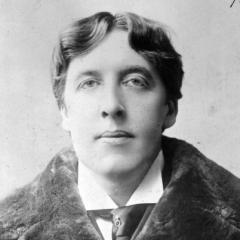
Oscar Wilde
Oscar Wilde

Oscar Wilde, born on October 16, 1854, in Ireland, and died on November 30, 1900, was a renowned Irish writer, playwright, and poet. His works are known for their wit, satire, and unique style, with notable works including 'The Picture of Dorian Gray' and 'Lady Windermere's Fan'. more

You May Also Like

“I could keep him in place with the weight of a fingertip, I think. Very gently, very carefully, I curl the hand on his chest into the fabric of his biosuit, tugging him ever so slowly toward me. My cheeks are streaked with dried tears, and I can see every shade of violet in his eyes, the line of blood across his cheek where a shard of the exploding Trigger cut it. And as our helmets touch, we’re so close I can count his eyelashes. And he holds still for me. “I don’t know what comes next,” I say softly. “But why don’t we see where this path leads us? Let’s just find out together.”

“He eagerly suffered for us when we were failing, as orphans. Will he cross his arms over our failures now that we are his adopted children? His heart was gentle and lowly toward us when we were lost. Will his heart be anything different toward us now that we are found? While we were still...He loved us in our mess then. He'll love us in our mess now. Our very agony in sinning is the fruit of our adoption. A cold heart would not be bothered. We are not who we were.”

“Whether plagues are managed quickly doesn't just depend on hardworking doctors and scientists. It depends on people who like to sleep in on weekends and watch movies and eat French fries and do the fantastic common things in life, which is to say, it depends on all of us. Whether a civilization fares well during a crisis has a great deal to do with how the ordinary, nonscientist citizen responds. A lot of the measures taken against plagues discussed in this book will seem stunningly obvious. You should not, for instance, decide diseased people are sinners and burn them at a literal or metaphorical stake, because it is both morally monstrous and entirely ineffective. But them a new plague crops up, and we make precisely the same mistakes we should have learned from three hundred years ago.”

“But when he deals with the Winner that [Jesus] is the most romantic, in the sense most real. The world had always loved the Saint as being the nearest possible approach to the perfection of God. Christ, through some divine instinct in him, seems to have always loved the Winner as being the nearest possible approach to the perfection of man. His primary desire was not to reform people, any more than his primary desire was to relieve suffering. To turn an interesting thief into a tedious honest man was not his aim. He would have thought little of the Prisoner's Aid Society and other modern movements of the kind. The conversion of a Pharisee would not have seemed to him a great achievement by any means. But in a manner not yet understood of the world he regarded sin and suffering as being in themselves beautiful, holy things, and modes of perfection. It sounds a very dangerous idea. It is so. All great ideas are dangerous. That it was Christ's creed admits of no doubt. That is the true creed I don't doubt myself.”