Quotessence
Home / Quotes / Quote by Elizabeth Strout

Quote by Elizabeth Strout

Work

Oh William!

Browse quotes and source details for this work. more
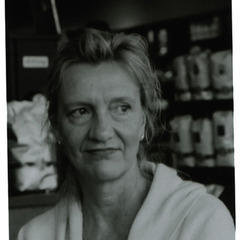
Author

Elizabeth Strout
Elizabeth Strout

Elizabeth Strout (born January 6, 1956) is an acclaimed American author known for her nuanced portrayals of small-town life and human complexity. Born in Portland, Maine, she grew up in a literary family. Strout won the Pulitzer Prize for Fiction in 2009 for her novel 'Olive Kitteridge,' which was adapted into an award-winning HBO miniseries. Her other notable works include 'Amy and Isabelle,' 'The Burgess Boys,' and 'Anything Is Possible.' Strout's writing often explores themes of loneliness, family, love, and loss through the lives of ordinary people. She is praised for her concise yet powerful prose and deep psychological insight. Her works have been translated into multiple languages and have a global readership. more

You May Also Like

“Do not say that you're afraid to trust your mind because you know so little. Are you safer in surrendering to mystics and discarding the little that you know? Live and act within the limit of your knowledge and keep expanding it to the limit of your life. Redeem your mind from the hockshops of authority. Accept the fact that you are not omniscient, but playing a zombie will not give you omniscience -- that your mind is fallible, but becoming mindless will not make you infallible -- that an error made on your own is safer than ten truths accepted on faith, because the first leaves you the means to correct it, but the seconds destroys your capacity to distinguish truth from error. In place of your dream of an omniscient automaton, accept the fact that any knowledge man acquires is acquired by his own will and effort, and that that is is his distinction in the universe, that is his nature, his morality, his glory.”

“She would have been happy living all her life in her country. There was an alegría inherent to Colombians, optimism even through tears, but never the kind of self-interrogation of “happiness” she observed in the north, the way people constantly asked themselves if they were content as if it were their main occupation in life. And what was happiness? Not selfish fulfillment, of this she was certain. That seemed like a recipe for the opposite.”