Quotessence
Home / Quotes / Quote by Nick Hornby

Quote by Nick Hornby

“Dave and Serge...played the Fiddler's Elbow as if it were Giants Stadium, and even though it was acoustic, they just about blew the place up. They were standing on chairs adn lying on the floor, they were funny, they charmed everyone in the pub apart from an old drunk ditting next to the drum kit...who put his fingers firmly in his ears during Serge's extended harmonica solo. It was utterly bizarre and very moving: most musicians wouldn't have bothered turning up, let alone almost killing themselves. And I was reminded...how rarely one feels included in a live show. Usually you watch, and listen, and drift off, and the band plays well or doesn't and it doesn't matter much either way. It can actually be a very lonely experience. But I felt a part of the music, and a part of the people I'd gone with, and, to cut this short before the encores, I didn't want to read for about a fortnight afterward. I wanted to write, but I didn't want to read no book. I was too itchy, too energized, and if young people feel like that every night of the week, then, yes, literature 's dead as a dodo. (Nick's thoughts after seeing Marah at a little pub called Fiddler's Elbow.)”

Quote by Nick Hornby

Work

The Polysyllabic Spree

The book is a compilation of essays that delve into the author's love for reading and the pleasure derived from words with multiple syllables. It explores the transformative impact of literature on the individual and society, offering insights into the beauty and complexity of language. more

Author
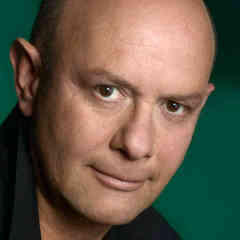
Nick Hornby
Nick Hornby

Nick Hornby is a renowned British novelist celebrated for his witty and insightful storytelling. Born on April 17, 1957, his works delve into the intricacies of modern life and human relationships. Known for his distinctive writing style, Hornby has captured the hearts of readers worldwide with his engaging narratives. more

You May Also Like

“To some perhaps it may appear a little strained to place this last-mentioned form of attachment on a level of importance with the others, and such persons may be inclined to deny to the homogenic [...] or homosexual love that intense, that penetrating, and at times overmastering character which would entitle it to rank as a great human passion. But in truth this view, when entertained, arises from a want of acquaintance with the actual facts.”

“He himself, he realized, had always been most abominably frightened, even at the height of his divine power, a frail god upon a rickety throne, afraid of opening letters, of making decisions, afraid of the instinctive knowledge in the eyes of mules, of the innocent eyes of good men, of the elastic nature of the passions, even of the devotion he had received from some men, and one woman, and dogs.”

“[H]e initially conceived of Olivier as a man of the greatest promise destroyed by a fatal flaw, the unreasoning passion for a woman dissolving into violence, desperately weakening everything he tried to do. For how could learning and poetry be defended when it produced such dreadful results and was advanced by such imperfect creatures? At least Julien did not see the desperate fate of the ruined lover as a nineteenth-century novelist or a poet might have done, recasting the tale to create some appealing romantic hero, dashed to pieces against the unyielding society that produced him. Rather, his initial opinion -- held almost to the last -- was of Olivier as a failure, ruined by a terible weakness.”

“You ask me about the idiosyncrasies of Philosophers? . . . There is their lack of historical sense, their hatred of even the idea of becoming, their Egyptianism. They think they are doing a thing honour when they dehistoricize it, sub specie aeterni – when they make a mummy of it. All that philosophers have handled for millennia has been conceptual mummies; nothing actual has escaped from their hands alive. They kill, they stuff, when they worship, these conceptual idolaters – they become a mortal danger to everything when they worship.”