Quotessence
Home / Quotes / Quote by Christina Rossetti

Quote by Christina Rossetti

“Who shall tell the lady's grief When her Cat was past relief? Who shall number the hot tears Shed o'er her, beloved for years? Who shall say the dark dismay Which her dying caused that day?”

Quote by Christina Rossetti

Author
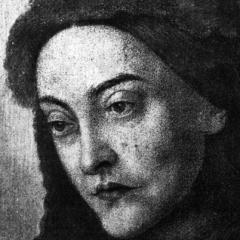
Christina Rossetti
Christina Rossetti

Christina Rossetti was a prominent Victorian-era British poet known for her profound emotional depth and religious themes. Her poetry has had a lasting impact on subsequent generations. more

You May Also Like

“Isolation, I was reminded again and again, is a danger. But what if one's real context is in books? Some days, going from one book to another, preoccupied with thoughts that were of no importance, I would feel a rare moment of serenity: all that could not be solved in my life was merely a trifle as long as I kept it at a distance. Between that suspended life and myself were these dead people and imagined characters. One could spend one's days among them as a child arranges a circle of stuffed animals when the darkness of night closes in.”

“Serenity is not the conclusion of a soul journey, it is the acceptance of being on a soul journey.”

“Joy is not the satisfied contemplation of an accomplished result, the emotion of victory, the satisfaction of having succeeded. It is the sign of an energy that is deftly deployed, it is a free affirmation: everything comes easy. Joy is an activity: executing with ease something difficult that has taken time to master, asserting the faculties of the mind and the body. Joys of thought when it finds and discovers, joys of the body when it achieves without effort. That is why joy, unlike pleasure, increases with repetition, and is enriched. When you are walking, joy is a basso continuo. Locally, of course, you may run into effort and difficulty. You will also find immediate moments of contentment: a proud gaze backwards to contemplate the long steep plunge of the slope behind you. Those satisfactions, though, too often present an opportunity to reintroduce quantities, scores, figures (which track? how long? what altitude?). And walking becomes a competition. That is why expeditions in high mountain country (conquering peaks, each one a challenge) are always slightly impure: because they give rise to narcissistic gratification. What dominates in walking, away from ostentation and showing off, is the simple joy of feeling your body in the most primitively natural activity.”

“In the history of walking, many experts considering him (Wordsworth) the authentic originator of the long expedition. He was the first – at a time (the late eighteenth century) when walking was the lot of the poor, vagabonds and highwaymen, not to mention travelling showmen and pedlars – to conceive of the walk as a poetic act, a communion with Nature, fulfilment of the body, contemplation of the landscape. Christopher Morley wrote of him that he was ‘one of the first to use his legs in the service of philosophy’.”