Quotessence
Home / Quotes / Quote by Colum McCann

Quote by Colum McCann

“Our father came to sleep in our house that night. He carried a small suitcase with a black mourning suit and a pair of polished shoes. Corrigan stopped him as he made his way up the stairs. 'Where d'you think you're going?'Our father gripped the bannister. His hands were liverspotted and I could see him trembling in his pause. 'That's not your room,' sad Corrigan. Our father tottered on the stairs. He took another step up. 'Don't,' said my brother. His voice was clear, full, confidant. Our father stood stunned. He climbed one more step and then turned, descended, looked around, lost. 'My own sons,' he said. We made a bed for him on a sofa in the living room, but even then Corrigan refused to stay under the same roof; he went walking in the direction of the city center and I wondered what alley he might be found in later that night, what fist he might walk into, whose bottle he might climb down inside.”

Quote by Colum McCann

Work

Let The Great World Spin

In this novel, the author weaves together the lives of various New Yorkers whose paths intersect on the day a high-wire artist performs an extraordinary feat. The story delves into the complexities of human connection and the resilience of the human spirit amidst the backdrop of a bustling city. more

Author
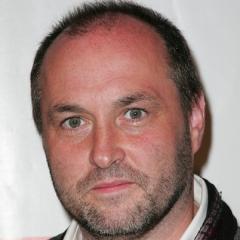
Colum McCann
Colum McCann

Colum McCann is an Irish writer known for his profound character development and rich narrative techniques. His works often explore the relationship between individuals and society, as well as deep insights into history and culture. Born on February 28, 1965, McCann's writing career began in the 1990s, and he has published numerous novels and short story collections. more

You May Also Like

“Most people are not looking for provable truths. As you said, truth is often accompanied by intense pain, and almost no one is looking for painful truths. What people need is beautiful, comforting stories that make them feel as if their lives have some meaning. Which is where religion comes from." (...) "If a certain belief--call it 'Belief A'--makes the life of that man or this woman appear to be something of deep meaning, then for them belief A is the truth. If Belief B makes their lives appear to be powerless & puny, then Belief b turns out to be a falsehood. The distinction is quite clear. If someone insists that Belief B is the truth, people will probably hate him ignore him, or, in some cases, attack him. It means nothing to them that Belief B might be logical or provable.”

“Robbing people of their actual history is the same as robbing them of part of themselves. It’s a crime." Fuka-Eri thought about that for a moment. Tengo went on, “Our memory is made up of our individual memories and our collective memories. The two are intimately linked. And history is our collective memory. If our collective memory is taken from us - is rewritten - we lose the ability to sustain our true selves.”

“A smile played around Aomame's straight lips. People were focused on her actions. No one was surprised to see her pull a gun out of her bag-- or at least they did not show surprise on their faces. Maybe they didn't believe it was a real gun. 'It is, though,' Aomame told them mentally. Next she turned the gun upward and thrust the muzzle into her mouth. Now it was aimed directly at her cerebrum-- the gray labyrinth where consciousness resided.”

“Before human beings possessed fire or tools or language, the moon had been their ally. It would calm people’s fears now and then by illuminating the dark world like a heavenly lantern. Its waxing and waning gave people an understanding of the concept of time. Even now, when darkness had been banished from most parts of the world, there remained a sense of human gratitude toward the moon and its unconditional compassion. It was imprinted upon human genes like a warm collective memory.”