Quotessence
Home / Quotes / Quote by Raoul Vaneigem

Quote by Raoul Vaneigem

“From the spectacular point of view, the reduction of man to consumer is an enrichment: the more things he has, the more roles he plays, the more he is. So it is decreed by the organization of appearances. But, from the point of view of lived reality, all power so attained is paid for by the sacrifice of true self-realization. What is gained on the level of appearances is lost on the level of being and becoming.”

Quote by Raoul Vaneigem

Work

The revolution of everyday life

This book delves into the ways in which ordinary experiences and actions can lead to significant social transformations, offering a critical analysis of the potential for revolution in daily life. more

Author
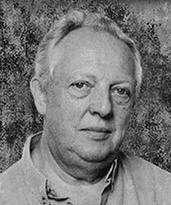
Raoul Vaneigem
Raoul Vaneigem

Raoul Vaneigem is a Belgian writer known for his critical analysis of consumerism and modern life. His work primarily focuses on issues of personal freedom, social change, and the essence of human existence. more

You May Also Like

“We protect our minds by an elaborate system of abstractions, ambiguities, metaphors and similes from the reality we do not wish to know too clearly; we lie to ourselves, in order that we may still have the excuse of ignorance, the alibi of stupidity and incomprehension, possessing which we can continue with a good conscience to commit and tolerate the most monstrous crimes”

“It's obvious that at such times reading represented for me something like the center of reality; the rest seemed to me freaks of nature . . . hallucinations perhaps would be more appropriate. Since that other world was one in which I was unhappy, I didn't pay it much heed. It was this kind of thinking that was responsible for my idealistic bent. It stems from my conviction that reality can be learned from words, and I remained convinced for at least thirty years that a book offered you a kind of truth, a truth difficult to seize, even a metaphysical truth, and that it revealed secrets about various things. I remember that when I was seventeen or so I read Dostoevsky, and I had the distinct impression that he was offering me a secret. I wasn't quite sure what it was, but a secret nonetheless that transcended not only ordinary knowledge but also scientific knowledge, something slightly mysterious. And that kind of thinking remained with me for a long time, until finally I realized that literature was only one more human activity among many others, and as such it did not reveal any secret: what it does is no more or no less than record the full scope of how a particular period in history views the world and its people. But it took me a long time to see that. And at the time I'm referring to—when I was fifteen or so, and then later on during my last year before the baccalaureate—I was in the process of contracting what I was later to call my neurosis, that is, the notion that since reality had been given to me through books, I would make contact with reality, and offer a more profound truth about the world, if I wrote books myself. The idea was the discovery, the thing one reveals, and it certainly derived from all the elements I have just mentioned.”