Quotessence
Home / Quotes / Quote by Stefan Zweig

Quote by Stefan Zweig

Work

Casanova

Browse quotes and source details for this work. more

Author

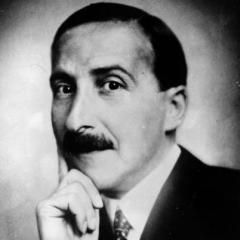
Stefan Zweig
Stefan Zweig

Stefan Zweig, born on November 28, 1881 in Vienna, was an Austrian novelist, playwright, and biographer. Known for his profound psychological insights and unique narrative style, he is a significant figure in European literature at the beginning of the 20th century. more

You May Also Like

“The truth is that he (Casanova) had ceased subtly to be an adventurer to become a noisy scoundrel, or if that is too harsh, that he had no longer the irresistible charm of being the world’s best loser. He was always greedy. Now he was grasping. He was always noticeable. Now he was loud. He had become without knowing it a social man, desperately interested in the stability of his own position which he tried, without knowing how to do it, to link up with the stability of society. He had become a fortune hunter, and shrank from the quest of chance; the supernatural shine had left his eyes. Men saw in him no longer Puck, but a rival.”

“Nevertheless this was the problem Casanova solved. His prime secret is in his own words. “ I have always believed that when a man gets it into his head to do something, and when he exclusively occupies himself in that design, he must succeed whatever the difficulties. That man will become Grand Vizier or Pope. He will upset a dynasty, provided he starts young and has the brain and perseverance necessary. For when a man has arrived at the age that Chance despises he can no longer do anything ; for without her aid there is no hope.”

“You have the most lovely skin,”  Finn told her. “Like mahogany. Like the finest river loam. Could I touch it?” “You are touching it, Casanova,”  Rita answered, eyes on the blood pressure dial. “Behave.” “Casanova?”  Finn shot Diego a questioning glance. “Famous lover.” “Ah. A compliment?” “Sarcasm.”  Please don’t make me explain sarcasm. “Typical.” Apparently, it wouldn’t be necessary.”

“You worked at night, when the shadows masked you and you were little more than a dream. You hid in the forest or the mountains, away from the steam engines and the lamps of the cities, the things that would expose you, confirming you and stripping you of your mystery. You showed yourself rarely, and only to the ones who needed to see you. After the free-for-all that was the earlier Chapters, when babies were stolen, young men murdered and maidens locked away, the fae had had to learn to be very careful about their involvement in the lives of the characters, lest they turn still further away from their beliefs.”