Quotessence
Home / Quotes / Quote by Charles Dickens

Quote by Charles Dickens

Work

Oliver Twist

Oliver Twist is a classic novel that follows the life of an orphan boy born in a workhouse. After daring to ask for more food, Oliver is punished and eventually runs away to London. There, he is taken in by a group of young pickpockets led by the cunning Fagin. The story explores themes of poverty, social injustice, and the struggle between good and evil as Oliver encounters both cruel and compassionate characters, ultimately seeking a place where he belongs. more
Author

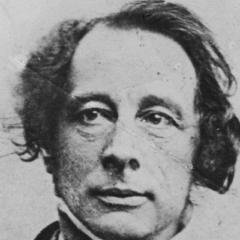
Charles Dickens
Charles Dickens

Charles Dickens, a British writer born on February 7, 1812, and died on June 9, 1870, is one of the greatest novelists of the 19th century. Known for his profound social criticism and vivid narrative style, Dickens' works extensively cover social reality, revealing various issues in the British society of the time. more

You May Also Like

“Still. Four words. And I didn’t realize it until a couple of days ago, when someone wrote in to my blog: Dear Neil, If you could choose a quote - either by you or another author - to be inscribed on the wall of a public library children’s area, what would it be? Thanks! Lynn I pondered a bit. I’d said a lot about books and kids’ reading over the years, and other people had said things pithier and wiser than I ever could. And then it hit me, and this is what I wrote: I’m not sure I’d put a quote up, if it was me, and I had a library wall to deface. I think I’d just remind people of the power of stories, and why they exist in the first place. I’d put up the four words that anyone telling a story wants to hear. The ones that show that it’s working, and that pages will be turned: “… and then w”

“Those of you who are more than casually familiar with books -- those of you who spend your free afternoons in fusty bookshops, who offer furtive, kindly strokes along the spines of familiar titles -- understand that page riffling is an essential element in the process of introducing oneself to a new book. It isn't about reading the words; it's about reading the smell, which wafts from the pages in a cloud of dust and wood pulp. It might smell expensive and well bound, or it might smell of tissue-thin paper and blurred two-colour prints, or of fifty years unread in the home of a tobacco-smoking old man. Books can smell of cheap thrills or painstaking scholarship, or literary weight or unsolved mysteries.”