Quotessence
Home / Quotes / Quote by Maurice Druon

Quote by Maurice Druon

“For, in those centuries, when numbers of children died in the cradle and half the women in childbirth, when epidemics ravaged adult life, when wounds were but rarely cured, and sores did not heal, when the Church’s teaching was ceaselessly directed towards a consciousness of sin, when the statues in the sanctuaries showed worms gnawing at corpses, when each one carried throughout his life the spectre of his own decomposition before his eyes and the idea of death was habitual, natural and familiar, to be present at a man’s last breath was not, as it is for us, a tragic reminder of our common destiny.”

Quote by Maurice Druon

Work

The Iron King

This book is a tale of a young protagonist who becomes the Iron King, a ruler of immense power and influence. The story delves into themes of ambition, betrayal, and the consequences of wielding great power. The narrative unfolds in a richly detailed fantasy world, filled with magical creatures and political intrigue. more

Author

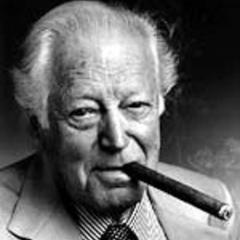
Maurice Druon
Maurice Druon

Maurice Druon was a renowned French novelist, known for his historical novels that often explored social and political issues set against the backdrop of French history. Born on April 23, 1918, in Paris, France, he passed away on April 14, 2009. more

You May Also Like

“Every time I looked toward a horizon of wondered if I should just walk and walk and never look back, I'd hear the promise I made eleven years ago as she wasted away on her deathbed. Stay together, and look after them. I'd agreed, too young to ask why she hadn't begged my elder sisters, or my father.”

“What would I have wanted to say if I had had the opportunity to see him one more time? I would like to think that I would have kept it simple and said, “I love you,” then just held his hand in silence, letting that thought linger in the space of the time we had left together.”

“I may be a bigot, I may be a pedant' but I believe I have the ordinary Englishman with me here. He does not want 'religion'; he wants God. And if you tell him that he knows God by an intuitive perception, you will only make him unhappy. He is fully conscious that the word came into his vocabulary when he was a child, when he was accustomed to accept from his elders a multitude of traditions, some of which his riper mind has discarded; that he has lived with the idea and grown accustomed to it, that it has formed part of a fairyland which he would like to find true. Precisely for that reason, he distrusts the sentiment; he suspects himself of fostering a grateful illusion, suspects that the wish was father to the thought. The notion of God fits in with his higher ideals, with his dearer hopes; all the more reason to surmise that it has been coined, by successive ages of mythology, for that purpose. The very reason why you ask him to believe in God, namely, that he wants to believe in God, is his main reason for doubting. The elders, when they heard Helen plead, made allowances for the beauty of her voice, lest they should be spellbound by its influence; what if this hope, too, should be an illusion of the Sirens? The Englishman wants truth of fact; you will not get him to replace it by artistic values. The pressure of fact is all around him, reflected in the daily urgency of living; you must give him a metaphysic of fact, for the alternative is despair.”