Quotessence
Home / Quotes / Quote by Hilma af Klint

Quote by Hilma af Klint

“Only for those prepared to leave their familiar life behind, will life emerge in a new gown of continually expanding beauty and perfection. But in order to attain such a state, it is necessary to achieve stillness in both thought and feeling.”

Quote by Hilma af Klint

Author
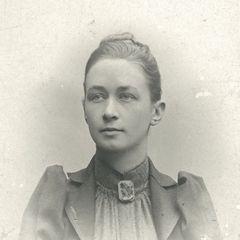
Hilma af Klint
Hilma af Klint

Hilma af Klint was a Swedish visual artist known for her abstract art. Born on October 26, 1862, and passing away on October 21, 1944, she is considered an important pioneer of modern abstract art. Her career began in the early 20th century, and her works, which were not widely recognized at the time, have since been recognized as significant contributions to the history of abstract art. more

You May Also Like

“Decisive works of art participate directly in the fabric of history surrounding their maker....As viewers we readily experience the power of ground on which we cannot stand — yet that very experience can be so compelling that we may feel almost honor-bound to make art that recaptures that power. Or more dangerously, feel tempted to use the same techniques, the same subjects, the same symbols as appear in the work that aroused our passion — to borrow, in effect, a charge from another time and place...they may begin to fill their canvasses and monitors with charged particles “appropriated” from other places and times. A premise common to all such efforts is that power can be borrowed across space and time. It cannot. There’s a difference between meaning that is embodied and meaning that is referenced.”

“And when the work is going well, why on earth would we want to know? Most of the myriad of steps that go into making a piece (or a year’s worth of pieces) go on below the level of conscious thought, engaging unarticulated beliefs and assumptions about what artmaking is...We rarely think about how or why we do such things — we just do them. Changing the pattern of outcome in your work means first identifying things about your approach that are as automatic as wedging the clay, as subtle as releasing the arrow from the bow. ...We use predictable work habits to get us into the studio and into our materials; we use recurrent bits of form as starting points for making specific pieces. ....The discovery of useful forms is precious. Once found, they should never be abandoned for trivial reasons...any device that carries the first brushstroke to the next blank canvas has tangible, practical value. ....The private details of artmaking are utterly uninteresting to audiences (and frequently to teachers), perhaps because they’re almost never visible — or even knowable — from examining the finished work. ....The hardest part of artmaking is living your life in such a way that your work gets done, over and over — and that means, among other things, finding a host of practices that are just plain useful. A piece of art is the surface expression of a life lived within productive patterns. Over time, the life of a productive artist becomes filled with useful conventions and practical methods, so that a string of finished pieces continues to appear at the surface. And in truly happy moments those artistic gestures move beyond simple procedure, and acquire an inherent aesthetic all their own. They are your artistic hearth and home, the working-places-to-be that link form and feeling. They become — like the dark colors and asymmetrical lilt of the Mazurka — inseparable from the life of their maker. They are canons. They allow confidence and concentration. They allow not knowing. They allow the automatic and unarticulated to remain so.”

“The human race has spent several millennia developing a huge and robust set of observations about the world, in forms as varied as language, art and religion. Those observations in turn have withstood many — enormously many — tests. We stand heir to an unstatably large set of meanings. Most of what we inherit is so clearly correct it goes unseen. It fits the world seamlessly. It is the world. But despite its richness and variability, the well-defined world we inherit doesn’t quite fit each one of us, individually. Most of us spend most of our time in other peoples’ worlds — working at predetermined jobs, relaxing to pre-packaged entertainment — and no matter how benign this ready-made world may be, there will always be times when something is missing or doesn’t quite ring true. And so you make your place in the world by making part of it — by contributing some new part to the set. And surely one of the more astonishing rewards of artmaking comes when people make time to visit the world you have created. Some, indeed, may even purchase a piece of your world to carry back and adopt as their own. Each new piece of your art enlarges our reality. The world is not yet done.”