Quotessence
Home / Quotes / Quote by Jiddu Krishnamurti

Quote by Jiddu Krishnamurti

Work

The Book of Life: Daily Meditations With Krishnamurti

Browse quotes and source details for this work. more

Author
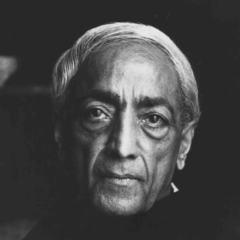
Jiddu Krishnamurti
Jiddu Krishnamurti

Jiddu Krishnamurti was an Indian philosopher, speaker, and writer who lived from May 12, 1895, to February 17, 1986. He is known for his teachings on the nature of the mind, consciousness, and the path to enlightenment. Krishnamurti emphasized the importance of self-inquiry and the transformation of consciousness, and his work has had a significant impact on individuals from various walks of life. more

You May Also Like

“Historically, people have been naive about what qualities, if mechanized, would undeniably constitute intelligence. Is intelligence an ability to integrate functions symbolically? If so, then AI already exists, since symbolic integration routines outdo the best people in most cases. If intelligence involves learning, creativity, emotional responses, a sense of beauty, a sense of self, then there is a long road ahead, and it may be that these will only be realized when we have totally duplicated a living brain.”

“I better go," Carter squeezed me once more and stood, grabbing his wallet from the coffee table. "I need to hit up the lottery if I want to get you out of this mess. Will you let me buy a monkey if we win, though?" "Only if you buy me an island off the coast of Fiji." "You crazy-ass woman. A monkey is so much cooler than an island." "How about a monkey IN Fiji?" "Now there's a woman after my own heart," Carter slapped his hand to his chest, sighing dramatically. "I'll let you know if we win." He started for the door. "Uh huh." "You'll know if we do. I'll be the one streaking on Pike Street.”

“Tis my humor as much to regard the form as the substance, and the advocate as much as the cause, as Alcibiades ordered we should: and every day pass away my time in reading authors without any consideration of their learning; their manner is what I look after, not their subject. And just so do I hunt after the conversation of any eminent wit, not that he may teach me, but that I may know him, and that knowing him, if I think him worthy of imitation, I may imitate him.”

“I read not with any particular object in mind, nor really with the intention of retaining any information about the subjects that I chose, but rather because the act of reading was a habit, and because it was soothing and, perhaps, from a lifetime's inculcated faith in the explanatory power of books, the half-held belief that somewhere in those hectares upon hectares of printed pages I might find that fact which would make sense of my growing unhappiness, allowing me to peel back the obscurant layers of myself and lay bare at last the solid structure underneath.”