Quotessence
Home / Quotes / Quote by Charles M. Schulz

Quote by Charles M. Schulz

Work

You're Not Elected, Charlie Brown

Browse quotes and source details for this work. more

Author
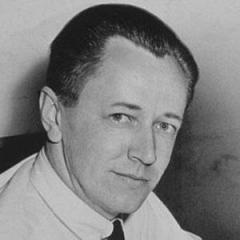
Charles M. Schulz
Charles M. Schulz

Charles M. Schulz, born on November 26, 1922, was an American cartoonist renowned for his creation of the comic strip 'Peanuts'. The strip, which began its newspaper run in 1950, has become a global phenomenon, beloved by readers worldwide. Schulz is celebrated for his unique sense of humor and profound insights into the lives of children. more

You May Also Like

“To have a consistent ethic of life is to be comprehensive in our advocacy for life and to refuse to think of issues in isolation from each other. It is a fundamental conviction that every person is sacred and made in the image of God. It requires pursuing whatever allows people to flourish and fighting everything that crushes life. That means that all these difficult issues -- the military, guns, racism, the death penalty, poverty, and abortion -- are connected, and we need a moral framework that integrates them. That's what it means to be pro-life for the whole life.”

“I need some rope," she said to Cogsworth as she entered the study, shaking herself into action. "Yes, of course, right away," the little clock said. "What?" "I'm not letting him free until I get some answers," Belle said, gritting her teeth. "Help me tie him up." "Tie up? The master?" Cogsworth stuttered. "He threw my father into a cold prison cell, then took me in his place! I think tying him up in front of a warm roaring fire is plenty generous, considering!”

“People spoke to foreigners with an averted gaze, and everybody seemed to know somebody who had just vanished. The rumors of what had happened to them were fantastic and bizarre though, as it turned out, they were only an understatement of the real thing. Before going to see General Videla […], I went to […] check in with Los Madres: the black-draped mothers who paraded, every week, with pictures of their missing loved ones in the Plaza Mayo. (‘Todo mi familia!’ as one elderly lady kept telling me imploringly, as she flourished their photographs. ‘Todo mi familia!’) From these and from other relatives and friends I got a line of questioning to put to the general. I would be told by him, they forewarned me, that people ‘disappeared’ all the time, either because of traffic accidents and family quarrels or, in the dire civil-war circumstances of Argentina, because of the wish to drop out of a gang and the need to avoid one’s former associates. But this was a cover story. Most of those who disappeared were openly taken away in the unmarked Ford Falcon cars of the Buenos Aires military police. I should inquire of the general what precisely had happened to Claudia Inez Grumberg, a paraplegic who was unable to move on her own but who had last been seen in the hands of his ever-vigilant armed forces [….] I possess a picture of the encounter that still makes me want to spew: there stands the killer and torturer and rape-profiteer, as if to illustrate some seminar on the banality of evil. Bony-thin and mediocre in appearance, with a scrubby moustache, he looks for all the world like a cretin impersonating a toothbrush. I am gripping his hand in a much too unctuous manner and smiling as if genuinely delighted at the introduction. Aching to expunge this humiliation, I waited while he went almost pedantically through the predicted script, waving away the rumored but doubtless regrettable dematerializations that were said to be afflicting his fellow Argentines. And then I asked him about Senorita Grumberg. He replied that if what I had said was true, then I should remember that ‘terrorism is not just killing with a bomb, but activating ideas. Maybe that’s why she’s detained.’ I expressed astonishment at this reply and, evidently thinking that I hadn’t understood him the first time, Videla enlarged on the theme. ‘We consider it a great crime to work against the Western and Christian style of life: it is not just the bomber but the ideologist who is the danger.’ Behind him, I could see one or two of his brighter staff officers looking at me with stark hostility as they realized that the general—El Presidente—had made a mistake by speaking so candidly. […] In response to a follow-up question, Videla crassly denied—‘rotondamente’: ‘roundly’ denied—holding Jacobo Timerman ‘as either a journalist or a Jew.’ While we were having this surreal exchange, here is what Timerman was being told by his taunting tormentors: Argentina has three main enemies: Karl Marx, because he tried to destroy the Christian concept of society; Sigmund Freud, because he tried to destroy the Christian concept of the family; and Albert Einstein, because he tried to destroy the Christian concept of time and space. […] We later discovered what happened to the majority of those who had been held and tortured in the secret prisons of the regime. According to a Navy captain named Adolfo Scilingo, who published a book of confessions, these broken victims were often destroyed as ‘evidence’ by being flown out way over the wastes of the South Atlantic and flung from airplanes into the freezing water below. Imagine the fun element when there’s the surprise bonus of a Jewish female prisoner in a wheelchair to be disposed of… we slide open the door and get ready to roll her and then it’s one, two, three… go!”