Quotessence
Home / Quotes / Quote by William Shakespeare

Quote by William Shakespeare

“Tis now the very witching time of night, When churchyards yawn, and hell itself breathes out Contagion to this world. Now could I drink hot blood And do such bitter business as the day Would quake to look on.”

Quote by William Shakespeare

Book:Hamlet

Work

Hamlet

Hamlet, a prince of Denmark, returns home after his father's death to find his uncle on the throne and his mother married to him. The play explores themes of madness, betrayal, and moral ambiguity as Hamlet seeks to avenge his father's murder. Its rich language and intricate plot have made it a cornerstone of Western literature. more
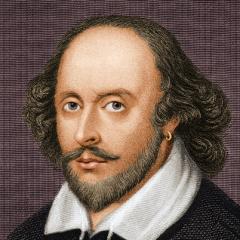
Author

William Shakespeare
William Shakespeare

William Shakespeare (1564 - April 23, 1616) was one of the greatest poets of the English Renaissance, renowned for his dramatic works. His plays spanned a variety of genres, including tragedy, comedy, and history, and have had a profound impact on literature worldwide. more

You May Also Like

“When he pictures Hell he can only think of a cold place, a wasteland, a wharf, a marsh, a landing stage; Walter distantly bawling, then the bawling coming nearer. That is how it will be – not pain itself, but the constant apprehension of pain; the constant apprehension of fault, the knowledge that you are going to be punished for something you couldn’t help and didn’t even know was wrong; and the discord in Hell will be constant, repeating for ever and ever, a violent argument being carried on in the next room.”

“Gehinom, or Gehenna, passed into use as a metaphoric designation for the place of punishment in the hereafter. According to a Talmudic view, the doors of Gehenna close behind apostates, informers, promoters of sin, and tyrants for many generations. According to the mystical holy book, the Zohar, sinners are punished for twelve months, half of the time in fire and half in snow. Among those who do not face Gehenna, a Talmudic passage includes the very poor and diseased. Despite the many differences of opinion as to the meaning of Gehenna, it is nowhere considered to be a dogma or a doctrine of faith that Jews are required to profess. Even those rabbinic sages who delighted in describing the torments of Gehenna and other shadowy places were usually aware that they were permitting their imagination to roam freely.”