“[...] Je veux dire la secousse qui a éprouvé Lisbonne, en 1755. - Excusez-moi. - Eh bien Voltaire s'est élevé contre elle. - C'est-à-dire... comment ? Il s'est élevé ? - Il s'est révolté, oui. Il n'a pas admis cette fatalité brutale ; et le fait même, il s'est refusé à abdiquer devant ce scandaleux excès de la nature dont les trois quarts d'une ville florissante et des milliers de vies humaines ont été victimes... [...] L'attitude de Voltaire était celle d'un vrai descendant des ces authentiques Gaulois qui envoyaient leurs flèches contre le ciel... Voyez-vous, ingénieur, voilà bien l'hostilité de l'esprit contre la nature, sa fière méfiance envers elle, sa noble obstination dans le droit à la critique à l'égard de cette puissance mauvaise et contraire à la Raison. Car la nature est une puissance et c'est se montrer servile que d'accepter la puissance [...].”
Quote by Thomas Mann
Work
Hermann Hesse's 'The Magic Mountain' is a profound novel that takes place in a Swiss sanatorium in the early 20th century. It follows the protagonist Hans Castorp's extended stay at the institution, where he encounters a diverse array of characters and engages in introspection. The novel delves into themes of personal growth, the nature of time, and the complexities of human relationships. more
Author
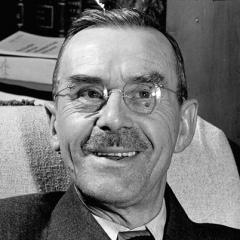
Thomas Mann, born on June 6, 1875, and died on August 12, 1955, was a German novelist and one of the greatest writers of the 20th century. Known for his profound psychological portrayals and rich imagination, his works extensively covered themes such as individual and society, history and reality. His masterpieces include 'Buddenbrooks' and 'The Magic Mountain'. more
You May Also Like
“They are not giving you their time because you are not their priority.”
“Is it possible to sum up a human life?”