“A locomotive whistle was a matter of some personal importance to a railroad engineer. It was tuned and worked (even "played") according to his own personal choosing. The whistle was part of the make-up of the man; he was known for it as much as he was known for the engine he drove. And aside from its utilitarian functions, it could also be an instrument of no little amusement. Many an engineer could get a simple tune out of his whistle, and for those less musical it could be used to aggravate a cranky preacher in the middle of his Sunday sermon or to signal hello through the night to a wife or lady friend. But there was no horseplay about tying down the cord. A locomotive whistle going without letup meant one thing on the railroad, and to everyone who lived near the railroad. It meant there was something very wrong. The whistle of John Hess' engine had been going now for maybe five minutes at most. It was not on long, but it was the only warning anyone was to hear, and nearly everyone in East Conemaugh heard it and understood almost instantly what it meant.”
Quote by David McCullough
Book:The Johnstown Flood
Work
The Johnstown Flood
Browse quotes and source details for this work. more
Author
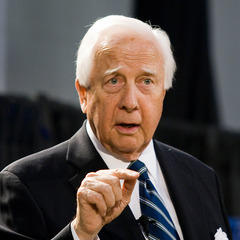
David McCullough
David McCullough is an American historian and author renowned for his in-depth research and vivid storytelling. His works typically focus on significant individuals and events in American history, enjoying great popularity among readers. more
You May Also Like
Source: Two Jeeps
Source: Black Minqua The Life and Times of Henry Green
Source: The Maps of Gettysburg: An Atlas of the Gettysburg Campaign, June 3–July 13, 1863
Source: Anarchist, Republican... Assassin: a political novel