Quotessence
Home / Quotes / Quote by Bill McKibben

Quote by Bill McKibben

“So: global warming is the ultimate problem of oil companies because oil causes it, and it's the ultimate problem for government haters because without government intervention, you can't solve it. Those twin existential threats, to cash and to worldview, meant that there was never any shortage of resources for the task of denying climate change.”

Quote by Bill McKibben

Work

Falter: Has the Human Game Begun to Play Itself Out?

Browse quotes and source details for this work. more

Author
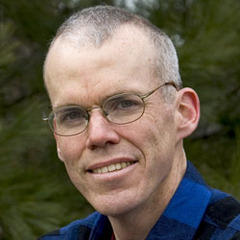
Bill McKibben
Bill McKibben

Bill McKibben, born on December 8, 1960, is an American environmentalist renowned for his deep research and advocacy on climate change issues. His work highlights the impact of human activities on the Earth, particularly the destruction caused by industrialization and consumerism. more

You May Also Like

“It is! “It is evolution,” the garden cried, “It is revolution,” the nature sighed, “It is diabolically dark,” the night feared, “It is unbearably hot,” the Sun cried, but no one cared, “It is a leafless and lifeless spring,” the seasons implored, “It is polluting me,” the river sobbed, but it was ignored, “It is no longer blue, my hue,” the sky admitted, “It is I who supports you and it is me who is being resented,” “It is no longer cold,” screamed the north pole, “It is from me that you all my bounties stole,” “It is no more like the sea it used to be, It is no more the water where we felt at home,” said the fish swimming in the dying sea, “It is not what it had to be, It is not where humanity had to be, It is so unfortunately, and this is how it is now, It is the new reality: the dying sea, the dark sky, the burning sun, and in it all of us now, It is the question for all of us though, where shall we go without them? It is not about either us or either them, It is more about what is right and what is true, And it is a fact, the sky is dark and diabolically blue!” Said I, to whoever was listening, Alas, they were busy pleasing the moments of life, filled with callous hastening!”

“Instead of a President whom he'd never see and or representatives he'd never meet, the peasant had a single lord. This lord was a local master whom he knew by sight even though he had no television or newspaper. This proximity allowed for an organic familiarity between ruler and ruled. They were not "on a first name basis," of course, but they were acquainted in the sense that they could be rightly considered "neighbors," even if they were not equals. This organic familiarity meant that the peasant paid his taxes in person, complained in person, and if need be he hung the lord from a local tree in person.”