Quotessence
Home / Quotes / Quote by Sheila Jeffreys

Quote by Sheila Jeffreys

“Despite women's experience or knowledge of sexual violence, despite whatever is going on in their marriages and how their husbands behave, women are expected to engage with enthusiasm in sex. [Women] have to make a separation between the sex in which they 'let go' and become enthusiastic and the rape they experienced last night or the pornographic advert they saw on the underground this morning. What is required is either a mind/body split or an eroticising of the oppression itself.”

Quote by Sheila Jeffreys

Work

Anticlimax: a feminist perspective on the sexual revolution

Anticlimax delves into the complexities of the sexual revolution, examining its implications and consequences through a feminist lens. The book investigates how the movement has shaped contemporary attitudes towards sex, relationships, and gender roles. more

Author
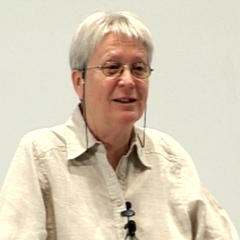
Sheila Jeffreys
Sheila Jeffreys

Sheila Jeffreys is a renowned political scientist born on May 13, 1948. Her research focuses on gender politics and feminist theory, offering profound insights into issues of gender inequality and women's rights. more

You May Also Like

“A woman who has experienced rape or sexual harassment in childhood or adulthood, who knows about the rape and murder of women from the media, who has seen the sexual values of men portrayed in their pornography and on billboards, has a difficult choice in the area of sex with men. She can choose to treat her man as being quite different from other men and as being in no way implicated in men's sexual violence. This is not easy and requires an awkward split in her mind. She is still unlikely to escape having her sexual and emotional responses affected by her experience and knowledge.”

“Starting with rape, feminists dragged into the public arena plentiful evidence that sex was not an unproblematic joy for women. The result of uncovering the huge but hidden amount of abuse that women and girl children suffered in the form of sexual harassment, sexual abuse in childhood and marital rape, was that the sexual-liberation agenda had to be submitted to critical scrutiny.”

“When women and girls experienced throughout life such systematic sexual aggression from men it was realistic and reasonable for women to be resistant to and suspicious of male sexuality. The focus moved away from women as the problem to a critique of male sexual behaviour and an analysis of the ways in which men's sexual violence sustained their power.”

“When feminist analysis moved on from stranger rape to the much more likely possibility in a woman's life of rape by a man close to her, the male establishment and heterosexual system suffered a more serious challenge. The issues of incest and marital rape strike blows at the fundamental institution of male supremacy itself, the heterosexual family. The serious contradiction faced by heterosexual women became much more pronounced as the prevalence of child sexual abuse and relationship rape was revealed. How could the trust and innocence required to get women to love and marry men, and produce children with them, be sustained in the context of this knowledge?”

“...a consequence which the pornbrokers may not have intended. Women were able to look at pornography and for the first time had at their disposal a panoramic view of what constituted male sexuality. [...] pornography became more and more concerned with sadomasochism and much more brutal in its portrayal of women. [...] We decided we needed to study pornography, to see exactly what was in it and understand what it told us about men's attitude to women, about male sexuality and about the construction of heterosexuality.”