Quotessence
Home / Quotes / Quote by Emmanuel Macron

Quote by Emmanuel Macron

“On a trip to Paris one day, little Sophie Met a giant lady lighting up the night sky "What's your name, you magical monster?" "My many visitors call me the Eiffel Tower." "In all your attire, don't your sometimes tire Of being seen only as a humdrum tower? You, a dragon, a fairy watching over Paris, An Olympic torch held aloft in grey skies?" "How you flatter me! So few poets these days Ever sing the praises of my Parisian soul, As did Cocteau, Aragon, Cendrars, Trénet and Apollinaire... Since you're so good At seeing beneath the surface, you could -If you like, when you're back from France- Take up your pen and write down Why you like me -it would be nice and fun!" "You can count on me! There's so much to say! I'll write twenty lines... but who will read them?" "Well, I know a man who'll read your verse." "Really? Who?" "The President of France”

Quote by Emmanuel Macron

Author
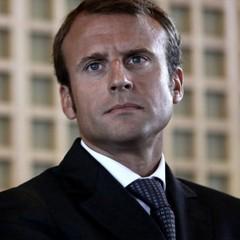
Emmanuel Macron
Emmanuel Macron

Emmanuel Macron is a French politician currently serving as the Minister of the Economy, Finance, and Industry. Born on December 21, 1977, in the northern city of Amiens, Macron has made a name for himself with his reformist spirit and modern political style. He obtained a doctorate from the École Normale Supérieure and entered the political scene in 2012, serving as the Minister of the Economy. In 2014, he left government to join the Socialist Party, and in 2016, he founded his own party, En Marche!, and was elected President of France, becoming the youngest president in French history. more

You May Also Like

“Dear S, This is so shitty of me to say or do but I literally think about you every day. Ever since we got closer this year I just argh. I really truly deeply love you. You are so much to me. I think of you when I buy shampoo, when I brush my teeth, when I make my bed. Every word in every book. Stop being so effortlessly lovely. I wish you felt the same as I do. all of my world, C”

“For the broken hearts, I promise it gets better. I promise that the minutes and hours will go by faster and that the ache in your chest will stop. I promise that the day you can forgive and realize that you don't have to feel this way will come. I promise you that right now, no matter what age you are, it will hurt. But pain is temporary. I promise that months or even years from now you'll look back and realize how silly you're acting. Although it doesn't feel silly. I promise that your relationship with them may or may not bloom into at least a friendship. I promise it'll stop hurting. Give it time, give yourself time to be an individual again. Find the confidence to do things on your own. Reconnect with the friends you pushed away. Form a better self. Be selfish. Stop thinking about their opinion. xoxoxo, M”

“How are you going do your writings? How can the others understand you through words describing places, sensations, thoughts, feelings, hope, love, separations on a maze of phrases and paragraphs cemented with your ability to 'knit' your story? Maybe, 'how' is more relevant to provide for your readers a consistent path to build a story from the beginning to the end than 'what' and 'why'. Of course, you are not going to dismiss them. These ones – 'what' and 'why' –, they are pretty damn good too.”

“Alma wrote in depth about laurel, mimosa, and verbena. She wrote about grapes and camellias, about the myrtle orange, about the cosseting of figs, She published under the name "A. Whittaker." Neither she nor George Hawkes believed that it would much benefit Alma to announce herself in print as female. In the scientific world of the day, there was still a strict division between "botany" (the study of plants by men) and "polite botany" was often indistinguishable from "botany"- except that one field was regarded with respect and the other was not- but still, Alma did not wish to be shrugged off as a mere polite botanist. Of course, the Whittaker name was famous in the world of plants and science, so a good number of botanists already knew precisely who "A. Whittaker" was. Not all of them, however. In response to her articles, then, Alma sometimes received letters from botanists around the world, sent to her in care of George Hawkes's print shop. Some of these letters began, "My dear Sir." Other letters were written to "Mr. A. Whittaker." One quite memorable missive even came addressed to "Dr. A. Whittaker." ( Alma kept that letter for a long time, tickled by the unexpected honorific.)”