“Not long ago, after my last trip to Russia, I had a conversation with an American very eminent in the field of politics. I asked what he read, and he replied that he studied history, sociology, politics and law. "How about fiction - novels, plays poetry?" I asked. "No," he said, "I have never had time for them. There's so much else I have to read." I said, "Sir, I have recently visited Russia for the third time and don't know how well I understand Russians; but I do know that if I only read Russian history I could not have had the access to Russian thinking I have had from reading Dostoevsky, Tolstoy, Chekhov, Pushkin, Turgenev, Sholokhov, and Ehrenburg. History only recounts, with some inaccuracy, what they did. The fiction tells, or tries to tell, why they did it and what they felt and were like when they did it." My friend nodded gravely. "I hadn't though of that," he said. "Yes, that might be so; I had always thought of fiction as opposed to fact." But in considering the American past, how poor we would be in information without Huckleberry Fin, An American Tragedy, Winesburg, Ohio, Main Street, The Great Gatsby, and As I Lay Dying.”
Quote by John Steinbeck
Work
America and Americans
Browse quotes and source details for this work. more
Author
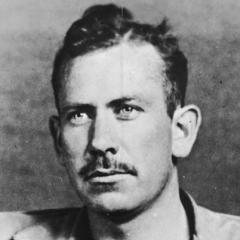
John Steinbeck
John Steinbeck was an American author renowned for his profound depiction of American society and the lives of farmers. His works often explore themes of poverty, social injustice, and human nature. Steinbeck was awarded the Nobel Prize in Literature in 1962 for his significant contribution to American literature. more
You May Also Like
Source: Flight
Source: To a God Unknown
“These were words to clothe a naked thing, and the thing is ridiculous in clothes.”
Source: To a God Unknown
Source: Grădina de sticlă
“He's eating God the way a bear eats meat against the winter.”
Source: To a God Unknown
“In utter loneliness, a writer tries to explain the unexplicable.”
Source: To a God Unknown
Source: To a God Unknown