Quotessence
Home / Quotes / Quote by Charles Dickens

Quote by Charles Dickens

“Cramped in all kinds of dim cupboards and hutches at Tellson's, the oldest of men carried on the business gravely. When they look a young man into Tellson's London house, they hid him somewhere til he was old. They kept him in a dark place, like a cheese, until he had the full Tellson flavour and blue-mould upon him. Then only was he permitted to be seen, spectacularly poring over large books and casting his breeches and gaiters into the general weight of the establishment.”

Quote by Charles Dickens

Work

a tale of two cities

Charles Dickens' novel explores themes of revolution, love, and fate through the lives of characters living in the tumultuous era of the late 18th and early 19th centuries. more

Author

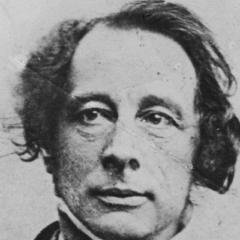
Charles Dickens
Charles Dickens

Charles Dickens, a British writer born on February 7, 1812, and died on June 9, 1870, is one of the greatest novelists of the 19th century. Known for his profound social criticism and vivid narrative style, Dickens' works extensively cover social reality, revealing various issues in the British society of the time. more

You May Also Like

“1920… Chaos. A chaos brewed from fear, lawlessness, constant changes of power, civil war, and disease. The Red Commissars with their grain requisitions. The White Guards with arrogant imperial plunder. Makhno’s forces with anarchist expropriations and the division of everything and everyone. The gangs of Hryhoriev, Marusia, and countless others… Each with its own rules. Yet all of them take and kill, rape and rob. In Tomakivka, only one institution functioned reliably – the hospital. It was needed by every warring authority, every general and ataman: the wounded had to be treated, the sick healed, and the able-bodied fed and given shelter. — Volodymyr Shablia, Stone. Book One Context note: Set in Ukraine during the Civil War (1917–1921), at the time of the Ukrainian People’s Republic, when multiple armed forces – Red, White, anarchist, and local warlord groups — fought for control, leaving civilians trapped in a landscape of violence, lawlessness, and disease.”

“Faith in God turned into the destruction of churches; collectivization into the Holodomor; hope for a better future into the loss of loved ones. People sought justice, but received unjust court verdicts; they defended their homeland, only to become prisoners or victims of occupation. — Volodymyr Shablia, Stone. Book Three (book description) Context note: This quote reflects the tragic fate of ordinary people in Soviet Ukraine during the 1930s–1940s, when religious persecution, forced collectivization, the Holodomor, political repression, and war shattered personal lives and destroyed hopes for justice and freedom.”

“There was no point where this Entity started or ended. I could not say it was standing over there or it came from that direction. It was everywhere at once. The communication taking place was instant, complete and silent. No words, no symbols or sounds. Yet any misunderstanding was impossible. This was a communion, not a conversation.”

“We can reject everything else: religion, ideology, all received wisdom. But we cannot escape the necessity of love and compassion.... This, then, is my true religion, my simple faith. In this sense, there is no need for temple or church, for mosque or synagogue, no need for complicated philosophy, doctrine or dogma. Our own heart, our own mind, is the temple. The doctrine is compassion. Love for others and respect for their rights and dignity, no matter who or what they are: ultimately these are all we need. So long as we practice these in our daily lives, then no matter if we are learned or unlearned, whether we believe in Buddha or God, or follow some other religion or none at all, as long as we have compassion for others and conduct ourselves with restraint out of a sense of responsibility, there is no doubt we will be happy.”