“[Martin Hellman:] Unless you're foolish enough to be continually excited, you won't have the motivation, you won't have the energy to carry it through.”
Quote by Simon Singh
Author
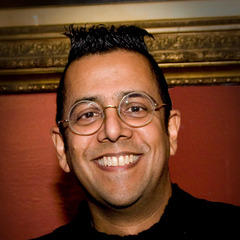
Simon Singh
Simon Singh (born September 19, 1964) is a British author, journalist, and science communicator known for his bestselling books on mathematics and science. Born in Somerset, England, he holds a PhD in particle physics from the University of Cambridge. His works include 'Fermat's Last Theorem' (1997), which tells the story of Andrew Wiles' proof of Fermat's Last Theorem and became an international bestseller; 'The Code Book' (1999), a history of cryptography; 'Big Bang' (2004), on the origins of the universe; and 'Trick or Treatment?' (2008), a critique of alternative medicine. Singh is praised for his clear and engaging writing style and has won several awards, including the British Science Writers' Award. He actively promotes science through BBC documentaries and public speaking, and has been involved in controversies over alternative medicine. more
You May Also Like
“Death doesn’t end our devotion. It only makes it stronger.”
Source: The Red Light Princess
Source: The Fell Sword
Source: The Complete Works of Swami Vivekananda, Volume 3
“How much self-love comes in the guise of selfless devotion!”
Source: The Volcano Lover
Source: Eena, The Return of a Queen
Source: A Familiar Rain
Source: Eena, The Return of a Queen
Source: Guru Vachaka Kovai
Source: A Familiar Rain